A new carpet kit can make or break the look of your Chevelle interior. If you want to know how to install chevelle carpet kit correctly, the job is less about brute force and more about preparation, fitment, and patience around the edges, seat mounts, and shifter area.
Before You Install a Chevelle Carpet Kit
Most molded carpet kits for 1964-72 Chevelle, Malibu, and El Camino models are designed to fit the floor pan contours, but molded does not mean drop-in perfect. Even a quality reproduction carpet may need time to relax, minor trimming, and careful work around brackets and bolt holes. That is normal on a classic GM A-body, especially if the floor has had repairs over the years.
Start by removing the seats, sill plates, kick panels as needed, seat belts, console if equipped, and the old carpet. If your car still has the original jute padding or insulation underneath, inspect it honestly. A carpet kit will not hide rust scale, uneven patches, or loose seam sealer. If the floor pan needs attention, now is the time to handle it.
Vacuum the entire floor and check the body plugs, seat studs, wiring runs, and shifter opening. Any debris left under the carpet will telegraph through once everything is bolted down. On a nicer restoration, that small bump you ignore now is the one you will keep staring at later.
Gather Tools and Set Expectations
This is not a difficult job, but it rewards careful work. A utility knife with fresh blades, chalk or masking tape for marking cuts, a pick or awl for locating holes, scissors, a ratchet set, and a heat source all help. Many installers use sunlight first and a heat gun second. Direct sun softens molded carpet without the risk of overheating one spot.
If you are installing insulation or sound deadener at the same time, dry fit that first. Added material can improve comfort and reduce road noise, but it can also slightly change how the carpet settles around the transmission tunnel and toe boards. That is not a problem if you expect it and trim conservatively.
Let the Carpet Relax Before Final Fitment
One of the most common mistakes is trying to install the carpet straight out of the box. Fold lines and shipping compression make the carpet fight you. Lay it out in the sun for a while, ideally on a clean surface, and let the molded shape come back.
If the weather is cold, bring the carpet indoors and warm it up before test fitting. A warm carpet is easier to position and far less likely to be cut wrong because the contours are clearer. Older restorers know this step saves time, even if it feels like waiting around.
Test Fit First, Cut Later
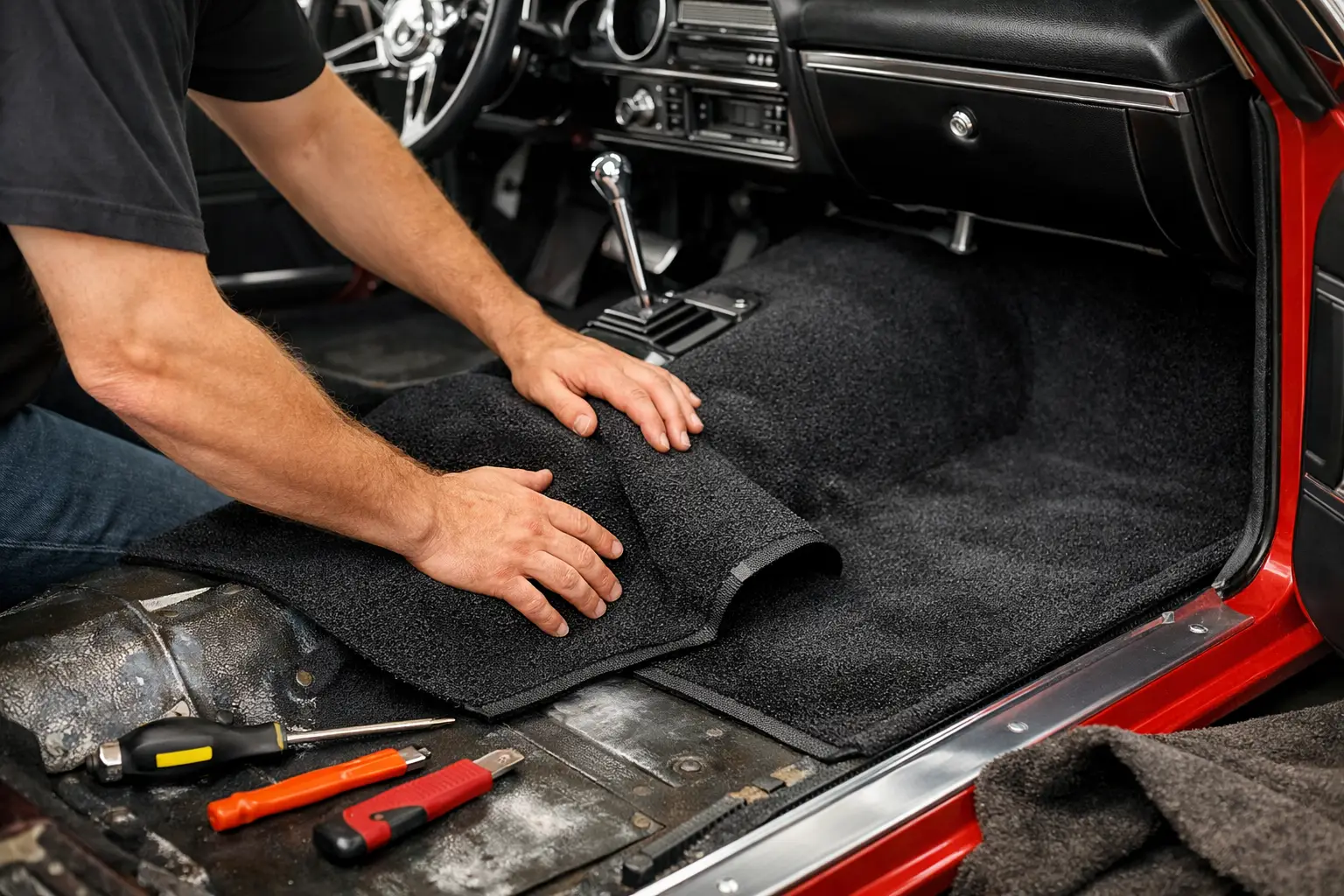
Set the carpet into the car without adhesive and center it over the transmission tunnel. Work from the middle out. The molded hump should sit naturally over the tunnel, and the front corners should begin to align with the toe boards and kick panel area.
Do not start cutting holes right away. Instead, push the carpet forward and backward slightly to find its natural position. On some kits, one side may look long until the center settles correctly. On others, the rear footwell shape tells you more than the front edge does. This is where experience matters – always fit by the floor contours first, not by one edge.
Once the carpet is sitting where it should, smooth it by hand from the center tunnel outward. Watch for bunching near the rocker panels and under the rear seat area. Minor waves usually flatten once the sill plates and seats are back in place, but large wrinkles mean the carpet still needs repositioning or more heat.
How to Install Chevelle Carpet Kit Around Holes and Brackets
The safest approach is to locate every opening from underneath the carpet and open each one gradually. Use your fingers to feel for seat studs, seat belt bolts, console brackets, dimmer switch location, and shifter opening. Then use an awl or pick to make a small pilot hole.
Small is the key word here. You can always enlarge a hole, but you cannot put carpet back once too much is cut away. For seat studs and bolts, a small X-shaped cut usually works better than a large round hole because the carpet stays tighter around the hardware. For the shifter or console opening, trim in stages and keep checking fitment.
If your Chevelle has a four-speed, automatic floor shifter, or console, measure twice and cut once is not just a saying. A slightly oversized shifter opening can end up visible after the boot or console is installed. On a bench seat car without a console, accuracy matters even more because there is less trim to hide mistakes.
Padding, Insulation, and Adhesive
Not every carpet installation needs glue. In many Chevelle interiors, the sill plates, seat mounts, console, and rear seat base hold the carpet securely once installed. That said, some builders use light spray adhesive in select areas such as toe boards or vertical sections to help the carpet stay where it belongs.
If you use adhesive, use it sparingly. Too much can create ridges, soak through lighter backing, or make future removal miserable. The better approach is usually proper fitment, careful trimming, and letting the factory-style retention points do the work.
Padding matters more than many people expect. If the kit includes jute backing, check how it lays at the edges and around the seat tracks. If you are adding separate insulation, keep thickness consistent. Too much material stacked in one area can cause the sill plates to fit poorly or make the seats sit unevenly.
Working the Edges for a Factory-Style Finish
The edges are where a decent installation turns into a clean one. Once the center is positioned and the main holes are opened, tuck the front edge up under the firewall insulation and work the sides under the rocker area. Reinstall the sill plates loosely at first so you can still make adjustments.
At the rear, check how the carpet transitions under the rear seat base and up the driveshaft tunnel. This area often needs hand smoothing and a little warmth to settle correctly. Do not rush to trim excess material until you are sure the rear seat bottom will cover the edge the way it should.
Kick panels, lower quarter trim, console brackets, and seat belts all help define the final look. Install them in a logical order and keep checking tension. You want the carpet to look relaxed but not baggy.
Common Fitment Problems and What They Usually Mean
If the carpet seems too short at the firewall, it may not be fully centered on the tunnel. If one side bunches badly at the rocker, the carpet may be rotated slightly. If the molded hump looks soft or misshapen, it likely needs more time in the sun or gentle heat.
When the seat holes do not seem to line up, stop and verify that the carpet is fully seated into the floor pan depressions. Reproduction floors, repaired pans, and extra insulation can shift the apparent hole locations just enough to throw you off. This is why experienced restorers make pilot holes only after the carpet has settled into place.
There is also a quality difference among carpet kits. Better molded kits usually follow the A-body floor more closely and need less persuasion. A bargain kit may still work, but expect more trimming and more compromise around contours. For a car you plan to keep, fit and material quality are worth paying attention to.
Final Installation and Reassembly
Once the carpet is positioned, trimmed, and lying flat, reinstall the sill plates, seat belts, console if equipped, lower trim panels, and seats. Tighten components gradually rather than locking one side down all at once. That gives you a chance to correct any slight pull or wrinkle before everything is fully secured.
After the seats are in, take another look at the tunnel, front footwells, and door openings. Press out any remaining minor waves by hand. Most molded carpet kits continue to settle for a short time, especially in warm weather.
For restorers who want the job to look right the first time, careful parts selection matters as much as installation technique. A properly molded carpet kit backed by correct insulation, trim, and fasteners saves time and gives the interior the factory-spec appearance these cars deserve. That is where working with a specialist like Classic Parts can make the process a lot easier.
A Chevelle interior always rewards patient work. Take your time, trim less than you think you need, and let the car tell you where the carpet wants to sit.