One bad-fitting trim piece can turn a clean Chevelle restoration into a weekend of rework. That is why the chevelle OEM vs reproduction parts question matters so much. It is not just about price. It is about fit, finish, originality, safety, and how you want the car to live once it is back on the road.
For most 1964-72 Chevelle, Malibu, and El Camino owners, there is no single right answer. Some restorations call for original GM parts wherever possible. Others need quality reproduction components because the factory pieces are too worn, too scarce, or simply unavailable. The smart move is knowing where OEM matters most and where reproduction parts can save time, money, and frustration without compromising the result.
Chevelle OEM vs reproduction parts: what each one really means
OEM usually means an original GM part made for the car when it was new. In the Chevelle world, that can include used original parts, new old stock, and factory take-offs. These parts carry the appeal of authentic materials, original stamping details, and factory-correct appearance. For concours restorations and highly original cars, that matters.
Reproduction parts are newly manufactured replacements designed to match the original part as closely as possible. Quality varies. Some reproduction parts are excellent and install with little trouble. Others may need adjustment, minor fabrication, or finishing work to get the fit right. The difference often comes down to the manufacturer, tooling quality, and how exact the original GM part was to begin with.
That is the real issue. OEM has authenticity on its side, but age, wear, and availability can work against it. Reproduction has accessibility and consistency, but not every part is built to the same standard.
Where OEM parts usually make the biggest difference
If you are building a factory-correct Chevelle, certain areas deserve extra attention. Exterior trim is one of them. Moldings, bezels, emblems, and grille components often reveal small detail differences right away. Original GM parts tend to have sharper lines, better chrome quality, and more correct finishes than lower-grade reproductions.
Interior details can be similar. Dash trim, knobs, gauges, and certain brightwork pieces often carry subtle differences in texture, sheen, and lettering. Those details may not matter on a casual driver, but they absolutely matter on a judged car or a high-end restoration where the goal is factory appearance.
Hardware is another category many restorers overlook. Original bolts, clips, and fasteners may seem small, but head markings, finishes, and dimensions all affect how correct the finished car looks. In visible areas, OEM or factory-correct hardware can make a noticeable difference.
There is also resale value to consider. Buyers shopping for a serious restoration often ask how much of the car remains original and where OEM parts were retained or sourced. That does not mean every reproduction part hurts value. It means original components still carry weight, especially on rare trim levels, SS cars, convertibles, and numbers-conscious builds.
Where reproduction parts often make more sense
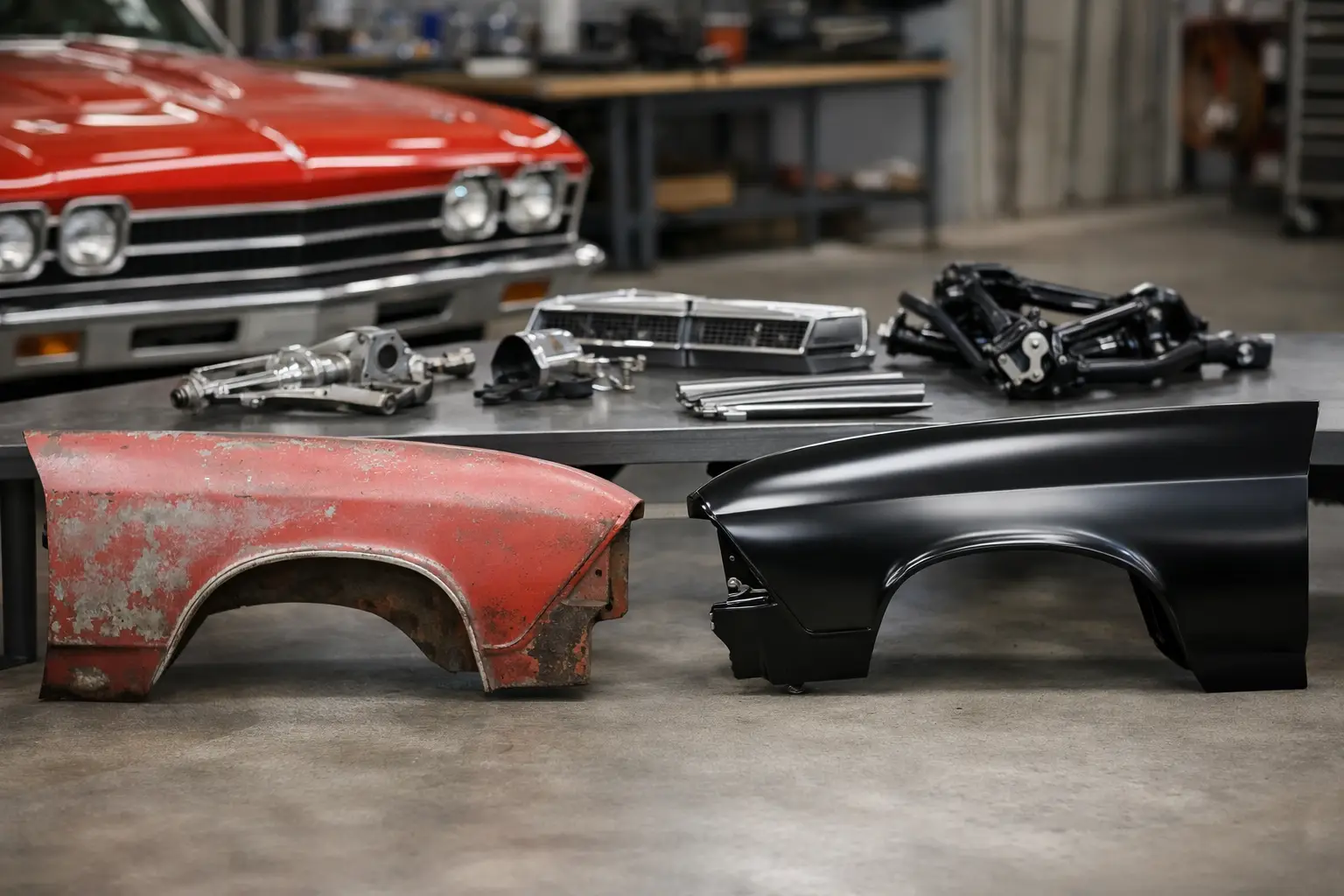
Sheet metal is one of the easiest examples. Rusted fenders, quarter panels, floor pans, and trunk pans are often beyond practical repair. Clean original sheet metal is getting harder to find, more expensive to ship, and not always as straight as buyers hope. Good reproduction sheet metal gives many restorers a realistic path forward.
Weatherstripping is another area where reproduction usually wins. Original seals are often brittle, flattened, or cracked from age. Even if an OEM piece exists, it is still old rubber. Fresh reproduction weatherstripping generally makes more sense for water sealing, road noise reduction, and basic drivability.
Suspension and chassis parts also lean toward reproduction or modern replacement. Bushings, ball joints, control arm components, springs, brake parts, and steering items are wear parts. In these categories, safety and function come first. Original used components rarely make sense unless they are being rebuilt and verified.
Electrical items can fall into the same category. Wiring, switches, lighting sockets, and charging components are often better replaced than reused, especially on a car that will be driven regularly. Reliability matters more than preserving a tired original harness with brittle insulation.
Fitment is where the decision gets real
Most Chevelle owners can live with a small variation in hidden parts. They do not feel the same way about a bumper that sits wrong, a door panel that clips poorly, or a hood molding that does not follow the body line. Fitment is where chevelle OEM vs reproduction parts stops being theoretical.
Original GM parts were made for these cars, so when they are straight and undamaged, they usually offer the best baseline for fit. But original does not always mean perfect. Fifty-year-old sheet metal may be bent, repaired, or rust-pitted. Used trim can be warped. Mounting tabs can be broken. By the time you restore that OEM piece, the cost can exceed a high-quality reproduction.
Reproduction parts can be very good, but expectations should stay realistic. Some install just like original. Others may need test-fitting, slotting holes, adjusting brackets, or transferring hardware. That is especially common with trim, sheet metal, and interior panels. Experienced restorers expect some handwork. First-time builders are often surprised by it.
This is where buying from a specialist matters. A supplier focused on GM A-body restoration can help you sort through what tends to fit well, what brands are trusted, and where original parts are still worth hunting down.
Match the part to the goal of the car
A judged restoration and a weekend cruiser should not be shopping the same way. If your goal is factory-correct detail, OEM deserves priority in visible and highly scrutinized areas. If your goal is a solid driver that looks right and performs reliably, reproduction parts may be the better value across much of the car.
That middle ground is where most builds land. Many restorers mix original and reproduction parts very successfully. They save OEM pieces where authenticity shows and use reproduction where function, availability, and cost matter more.
For example, you might keep original dash components, trim, and date-correct details while using reproduction weatherstripping, carpet, wiring, suspension parts, and floor pans. That is not cutting corners. That is building smart.
How to judge reproduction quality before you buy
Not all reproduction parts are created equal, and seasoned Chevelle owners know it. Before buying, look at the material, finish, and how the part is manufactured. Stamped metal parts should have crisp lines and consistent thickness. Rubber parts should feel properly formed, not soft and vague. Interior pieces should match original grain and color as closely as possible.
Ask practical questions. Is the part known to fit without major rework? Does it include the correct mounting points? Is it intended for your exact year, body style, and trim level? Small year-to-year changes in A-body cars can create big installation problems if the part is only close.
This is one reason many restorers prefer working with established specialists rather than broad catalog sellers. A knowledgeable supplier can help separate parts that are acceptable from parts that are truly right for the job. After more than 40 years serving classic GM owners, Classic Parts has seen where reproduction parts shine and where original components still carry the advantage.
Cost matters, but false economy is expensive
An inexpensive reproduction part that needs heavy modification, replating, repainting, or replacement is not a bargain. The same goes for a cheap used OEM part that arrives pitted, bent, or missing hardware. Price only tells part of the story.
Think in total installed cost. That includes labor, refinishing, return risk, and your time. A more expensive part that fits properly the first time often saves money. That is especially true if you are paying a shop for restoration work.
On the other hand, paying top dollar for OEM in every category can drain a budget fast without improving the finished car in meaningful ways. No one gets bonus points for old rubber, worn bushings, or questionable electrical parts. Spend where originality is visible and valued. Save where modern replacement makes the car better to own.
The best approach for most Chevelle restorations
The strongest restorations usually are not purely OEM or purely reproduction. They are selective. They respect the areas where factory originality matters and take advantage of quality reproduction parts where replacement is the practical choice.
If the part affects safety, weather sealing, or basic reliability, reproduction or rebuilt replacement is often the smartest route. If the part defines appearance, correctness, or collector value, OEM is usually worth stronger consideration. And if a reproduction part has earned a solid reputation for fit and finish, there is no reason to avoid it just because it is new.
A Chevelle restoration always involves trade-offs. Budget, timeline, intended use, and parts availability all shape the decision. The goal is not to win an argument about old versus new. The goal is to end up with a car that looks right, works right, and makes you glad you kept turning wrenches.