Nothing exposes shortcuts faster than a Chevelle convertible top. A small misalignment at the header, tired lift cylinders, or weatherstrips that do not seat correctly can turn a clean restoration into a car that leaks, binds, or never quite looks finished. This chevelle convertible top parts guide is built to help you sort the system the right way, so you can buy with confidence and restore the top to proper function, fit, and factory-style appearance.
What belongs in a Chevelle convertible top system
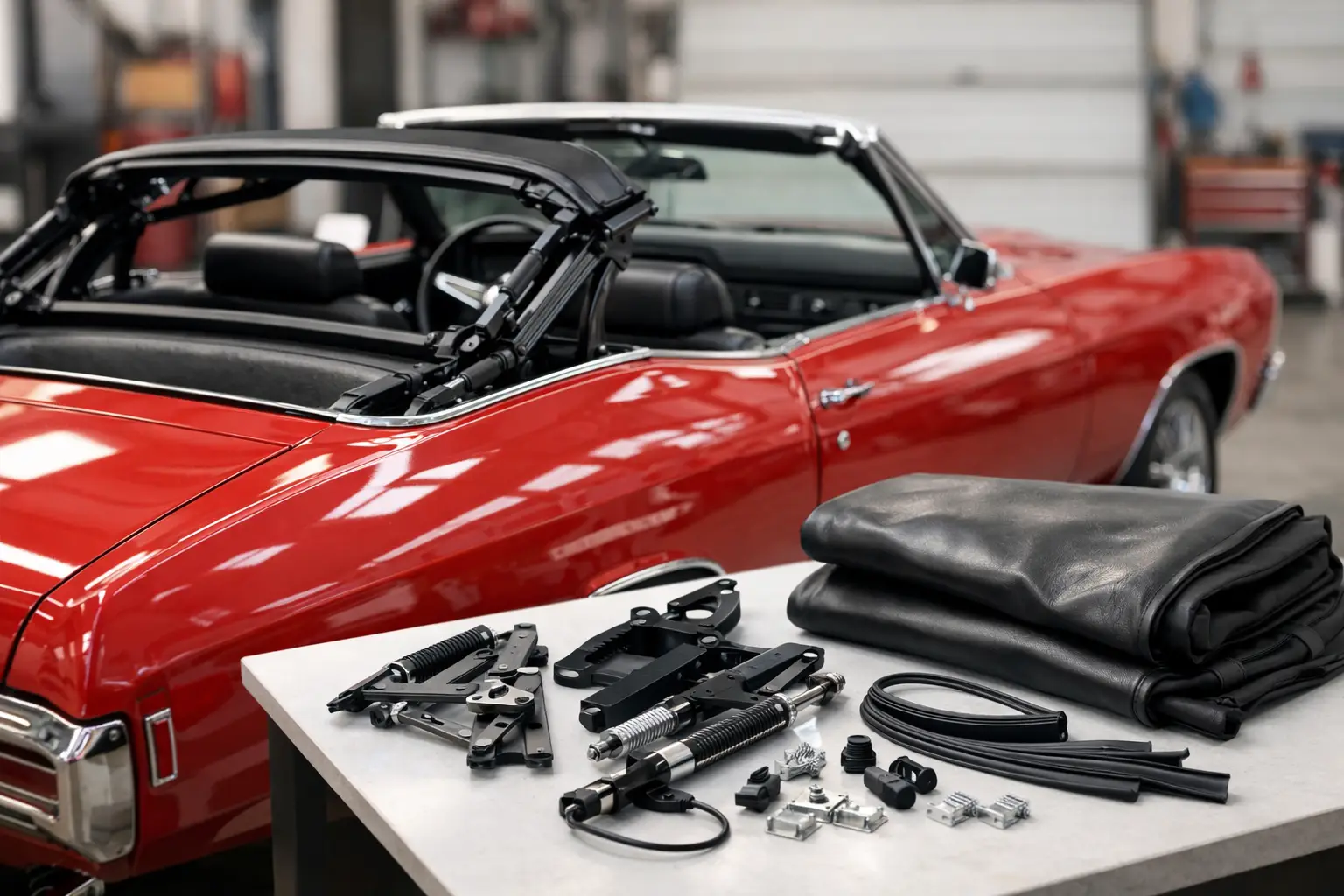
On a 1964-72 Chevelle, the convertible top is not just fabric stretched over a frame. It is a full assembly made up of the folding top frame, pivot hardware, top pads, well liner, rear window section, weatherstripping, latch components, hydraulic cylinders, hoses, pump, and a long list of small hardware pieces that make the whole system move and seal correctly.
That is why experienced restorers rarely replace one visible item and call it done. If the top material is new but the pads are worn, the top can wrinkle or sit unevenly. If the cylinders are weak, the frame may move slowly or twist under load. If the header seal is flattened, water and wind noise can still make the car feel unfinished. The best results come from treating the system as a group of related parts, not a single product.
Start with the top frame before buying anything else
A good chevelle convertible top parts guide always starts with the frame, because every other part depends on it. If the frame is bent, welded poorly, rusted at pivot points, or missing correct hardware, no amount of adjustment will make the rest of the installation come out right.
Check the side rails for symmetry, inspect the pivot points for wear, and look closely at the header bow and rear tack areas. Frames that have been forced up or down by weak hydraulics often show stress in the side arms. Sloppy pivots can also create side-to-side movement that makes the top material fit inconsistently.
If your frame is solid, you are ahead of the game. If it is not, fix that first. It is cheaper than ruining a new top skin or chasing leaks that are really caused by structural misalignment.
Hydraulic parts that make the top work
The power top system on these cars is simple, but age is not kind to seals, hoses, and pumps. The main parts are the hydraulic pump, lift cylinders, and connecting hoses. If one part is leaking, the rest of the system is usually not far behind.
Lift cylinders
Convertible top cylinders do the heavy lifting, and weak or leaking units are one of the most common failure points. A cylinder that seeps fluid can lower system pressure and leave the top moving unevenly. If one side is stronger than the other, the frame can rack during operation.
For a dependable repair, many restorers replace both cylinders together. It costs more up front than changing one side, but it keeps movement balanced and saves you from opening the system twice.
Pump and hoses
A tired pump may still run while struggling under load. Slow operation, whining, or inconsistent motion can point to pump wear, contaminated fluid, or deteriorated hoses. Old hoses may look acceptable from the outside while softening internally or leaking at fittings.
If you are restoring the whole car, replacing hoses while access is easy is usually the smart move. Hydraulics are one of those areas where partial repairs often lead to repeat labor.
Weatherstripping and seals are where comfort lives
A Chevelle convertible can look excellent and still feel disappointing if the seals are wrong. Header weatherstrips, side rail seals, pillar seals, and related rubber components control water intrusion, wind noise, glass contact, and overall cabin comfort.
Correct fit matters more than people expect. Rubber that is too hard, too thick, or poorly shaped can keep the top from latching cleanly or force the windows out of alignment. Rubber that is too soft may compress quickly and lose sealing ability. Factory-style profiles make a real difference here, especially on a car where door glass and vent window alignment already require patience.
This is also where model-year details matter. Small changes across 1964-72 production runs can affect fit, so matching seals to the exact year and body style is worth the time.
The top material is only one piece of the job
Most buyers focus first on the outer top, and understandably so. It is the most visible part of the system. But material choice should be made alongside the supporting components that affect fit and finish.
Pads, cables, and well liner
Top pads control how the outer material lays across the frame. Worn or incorrect pads can create wrinkles, loose sections, or a top that sits too high or low in key areas. Side cables help maintain tension and shape, while the well liner protects the folded top and gives the storage area a finished look.
These are not glamorous parts, but they are essential. If your top fabric is being replaced, pads and cables should be evaluated at the same time. Reusing old support pieces under new material is one of the fastest ways to compromise the result.
Rear window section and tack strips
Depending on the setup and material choice, the rear window section and tack strip areas deserve close attention. Brittle or damaged attachment surfaces can make even a quality top difficult to install correctly. If the tack strips are failing, they need attention before the final covering goes on.
Latches, handles, and header components
If the front of the top does not close confidently, the car never feels right. Header latches, latch handles, hooks, and related hardware are small parts with a big job. Wear at the latch can create looseness, poor compression at the seal, and rattles that are hard to diagnose later.
Look at the latch operation before ordering cosmetic pieces. A nicely restored handle will not help if the internal mechanism is worn or the header alignment is off. Proper latch pressure should feel secure without requiring excessive force. If it takes a fight to close, the problem may be alignment, weatherstrip thickness, or frame position rather than the latch itself.
Hardware kits save time and reduce mistakes
Convertible top restorations have a way of exposing missing fasteners, stripped screws, and incorrect hardware installed decades ago. That is where a proper hardware and bolt kit pays for itself. Matching original-style hardware helps the top go together as intended and keeps you from reusing questionable pieces just to finish the job.
This is especially true around pivot points, side rails, and trim attachment. Old hardware may have stretched threads, rust, or mixed head styles from prior repairs. Replacing those pieces during reassembly gives you a cleaner install and fewer surprises later.
How to buy the right parts for your restoration goals
Not every Chevelle build needs the same level of detail. A weekend driver, a factory-correct restoration, and a high-end show car will all approach convertible top parts a little differently.
If originality is the priority, pay close attention to material type, grain, seal profile, and year-specific fitment. If the car is a driver, durability and dependable sealing may matter more than exact assembly-line appearance. Neither approach is wrong, but knowing your goal before you order keeps the project consistent.
It also helps to be honest about what you are replacing. If your frame is original but the hydraulics are failing and the seals are hard as plastic, a top skin alone is not the economical option it appears to be. Doing the job once with the right supporting components is usually the better value.
Common mistakes this chevelle convertible top parts guide can help you avoid
The biggest mistake is buying parts in isolation. A leaking top is not always bad weatherstripping. A top that will not latch is not always a bad latch. A wrinkled top does not always mean poor material quality. Convertible systems are interconnected, and diagnosis has to follow that reality.
Another common problem is ignoring glass alignment. Door glass and vent window position directly affect seal contact. If the windows are not adjusted correctly, even good weatherstripping may seem wrong. Restorers also run into trouble by mixing worn original hardware with new moving parts, which can create uneven operation and premature wear.
The safest path is to inspect the frame, hydraulics, seals, latches, pads, cables, and hardware as one system. That approach takes more planning, but it delivers a result that looks right, seals right, and operates the way a Chevelle convertible should.
For owners who want factory-spec confidence without chasing parts from five different sources, working with a specialist matters. Classic Parts has built its reputation around deep A-body inventory, hard-to-find components, and practical guidance that helps restorers get the details right. When the top on your Chevelle goes up and down smoothly, seals against the glass, and finishes the car the way it should, every extra minute spent choosing the right parts feels worth it.