A Malibu that suddenly feels looser, creakier, or harder to align is often telling you something from below the body line. If you have been asking when should Malibu body bushings be replaced, the short answer is this: replace them when age, compression, cracking, or body movement starts affecting how the car rides, fits together, and responds on the road.
On a 1964-72 Malibu, body bushings do more than cushion the body from the frame. They help maintain correct body height, keep panels aligned, reduce noise and vibration, and support the overall feel of the car. When those mounts deteriorate, the change is not always dramatic at first. More often, it shows up as a collection of small problems that get worse over time.
What body bushings do on a classic Malibu
Your Malibu uses body bushings, sometimes called body mounts, between the frame and the body shell. These bushings isolate vibration and absorb some of the harshness that would otherwise travel straight into the cabin. Just as important, they maintain the proper spacing between the body and frame so doors, fenders, core support components, and sheet metal all sit where they should.
That matters even more on A-body cars that are now decades old. Original rubber mounts have been exposed to heat, oil, road grime, moisture, and repeated compression cycles for years. Even a well-kept car can have mounts that look acceptable from a distance but have already flattened, split, or lost the resilience they need to support the body correctly.
When should Malibu body bushings be replaced?
There is no single mileage number that applies to every car, because many of these vehicles no longer follow a normal service life. Some have been restored, some have sat for long periods, and others still carry original parts from the factory. In practice, Malibu body bushings should be replaced when their condition starts changing ride quality, body alignment, or structural support.
Age alone is a valid reason to inspect them closely. If the bushings are original or decades old, replacement is often preventive maintenance rather than a reaction to total failure. Rubber hardens with time, even on low-mileage cars. A mount does not need to be completely missing to cause problems. If it has compressed enough to lower the body unevenly or allow extra movement, it is already past its best service life.
For many restorers, the right time is during a frame-off build, body-off project, or any major chassis refresh. If you already have suspension components, brake lines, fuel lines, or sheet metal apart, body bushings are one of those parts that make sense to address while access is available. Waiting can mean doing the same labor twice.
Signs your Malibu body bushings are worn out
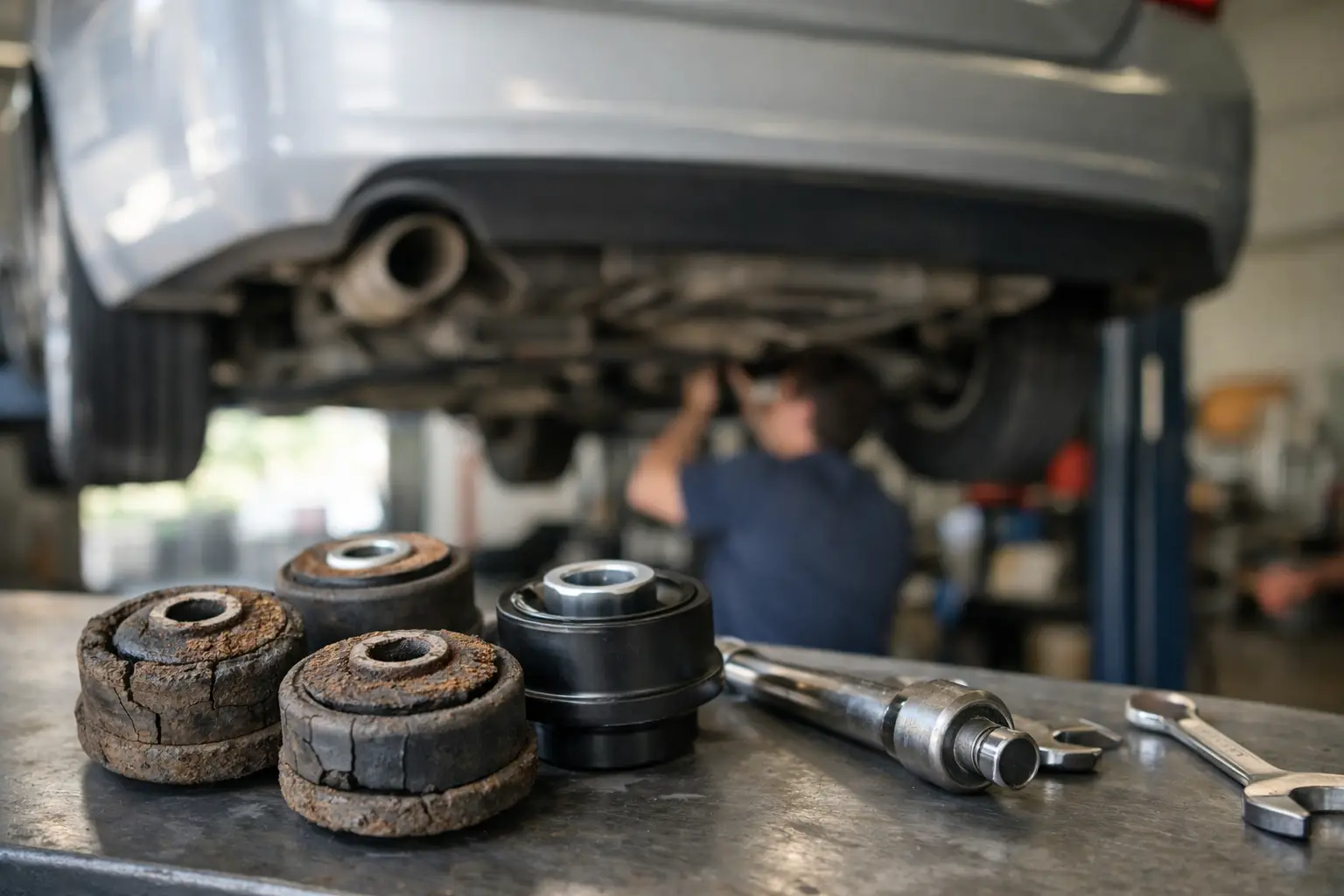
The clearest sign is visible deterioration. Cracked rubber, crushed mounts, missing material, metal sleeves separating from the rubber, or obvious dry rot all point toward replacement. On some cars, the bushings look flattened enough that the body appears to sit too close to the frame in certain locations.
Beyond what you can see, worn body mounts often show themselves through fit and feel. Doors may need a little extra slam to close properly. Gaps at the fenders or doors may look inconsistent. The front clip can seem slightly off, especially if the core support bushings have sagged. You may also hear creaks and groans from the body when pulling into driveways or over uneven pavement.
Ride quality changes are another clue. A Malibu with tired body bushings can feel less solid, with more rattles and a slightly unsettled character over bumps. That does not always mean the suspension is bad. Sometimes the body is simply moving more than it should relative to the frame.
Steering response can also suffer, though this is where diagnosis takes some judgment. Body bushings will not mimic every front-end problem, but badly worn mounts can contribute to a vague or disconnected feel. If the chassis is sound and the steering components check out, body mounts deserve attention.
Common symptoms owners mistake for something else
One reason these parts get overlooked is that their symptoms overlap with other restoration issues. Owners often blame suspension bushings, shocks, worn door hinges, or poor bodywork when the root problem is at least partly in the body mounts.
A sagging front clip is a good example. If the radiator support bushings have collapsed, hood and fender alignment can drift even when the sheet metal itself is fine. Likewise, if your doors fit differently depending on how the car is parked, the body may be shifting slightly on tired mounts.
That does not mean every alignment issue comes from body bushings. Rust in the floor, mount holes, braces, or frame areas can create similar symptoms. The smart approach is to inspect the full mounting area, not just the rubber pieces themselves.
How long do Malibu body bushings last?
On a modern daily driver, people might expect a maintenance interval. On a classic Malibu, condition matters more than years or miles. Original rubber body bushings can last a surprisingly long time, but “still there” is not the same as “still working correctly.”
If the car still carries factory mounts, replacement is usually justified on age alone if you are aiming for original ride quality and body support. If the mounts were replaced years ago with lower-quality parts, they may wear faster than expected. Cars stored outdoors, driven in wet climates, or exposed to oil contamination often see accelerated deterioration.
By contrast, a properly installed quality set on a fair-weather cruiser can serve well for many years. That is why inspection is more useful than guessing. Look at compression, cracking, height, and whether the body sits level across mounting points.
Rubber or polyurethane – what makes sense?
For most factory-style restorations, rubber body bushings are the right choice. They deliver the original character these cars were designed to have, with proper isolation from noise and vibration. If your goal is stock feel, stock ride quality, and factory-correct restoration, rubber is generally the better fit.
Polyurethane has its place, especially on more performance-oriented builds, but it comes with trade-offs. It is firmer, more durable in some conditions, and can reduce body movement. It can also transmit more vibration and harshness into the cabin. For a street-driven Malibu that you want to feel like a classic GM A-body should, that extra firmness is not always a benefit.
The right material depends on how you use the car. A pro-touring build may justify a different choice than a numbers-conscious restoration or weekend cruiser.
Should you replace all body bushings at once?
In most cases, yes. Replacing only one or two worn mounts can leave the rest of the old, compressed bushings to carry the same problems forward. It can also create uneven body height if fresh mounts are mixed with severely flattened originals.
A complete set gives you a consistent baseline. That matters for body alignment, ride quality, and long-term results. If you are already taking the time to lift the body and access the mounts, doing the full job usually makes more sense than piecemeal repairs.
This is also the best time to inspect the bolts, cages, sleeves, and mounting locations for rust or damage. New bushings installed over compromised hardware or rusty mounting points will not solve the real problem.
What to inspect before replacement
Before ordering parts, confirm the exact year and configuration of your Malibu. Mount locations and hardware details can vary, especially when dealing with different body styles or cars that have already been modified over the years. A-body restorations are full of small differences, and fitment confidence matters.
Inspect the frame mounting points, floor supports, and radiator support area carefully. If a mount bolt is seized or a captured nut breaks loose, the job can get more involved than expected. It is also wise to check adjacent components while you are there, including brake lines, fuel lines, steering couplers, and suspension items that may benefit from attention at the same time.
For owners restoring 1964-72 Chevelle, Malibu, and El Camino models, working with a specialist inventory can save time because the right factory-style components, hardware, and related chassis parts are easier to match correctly.
Don’t wait for total failure
The biggest mistake is waiting until the mounts are completely destroyed. By then, the car may have spent years with extra body stress, poor panel fit, and a ride that never felt quite right. Body bushings are not glamorous parts, but they make a real difference in how a classic Malibu feels, sounds, and lines up.
If your car is showing age in the mounts, if body gaps are drifting, or if the ride has developed that loose, tired A-body feel, it is probably time to stop wondering and start inspecting. Fresh body bushings will not change the personality of your Malibu – they bring back the solid, properly supported feel it was meant to have.