If your A-body still creaks over driveways, feels loose through the floor, or shows uneven panel gaps after decades of use, body bushings deserve a closer look. The urethane vs rubber body bushings question comes up on just about every serious Chevelle, Malibu, or El Camino project because those mounts affect far more than ride comfort – they influence body alignment, road feel, noise, and how true the car stays to its original character.
Why body bushings matter more than most owners expect
On a 1964-72 GM A-body, the body bushings sit between the frame and the body shell. Their job sounds simple, but it is not minor. They cushion vibration, maintain body-to-frame spacing, and help the chassis work as intended without sending every bump and rattle into the cabin.
When original bushings flatten, crack, or disappear altogether, the car can develop a long list of symptoms that are easy to blame on something else. Doors may shut poorly. The steering column alignment can feel off. Fenders, core support, and bumper fitment may drift. Even a fresh paint job can suffer if the body is not properly supported.
That is why choosing the right replacement material matters. This is not just a parts swap. It is a decision about how you want your car to drive, sound, and feel for years to come.
Urethane vs rubber body bushings: the real difference
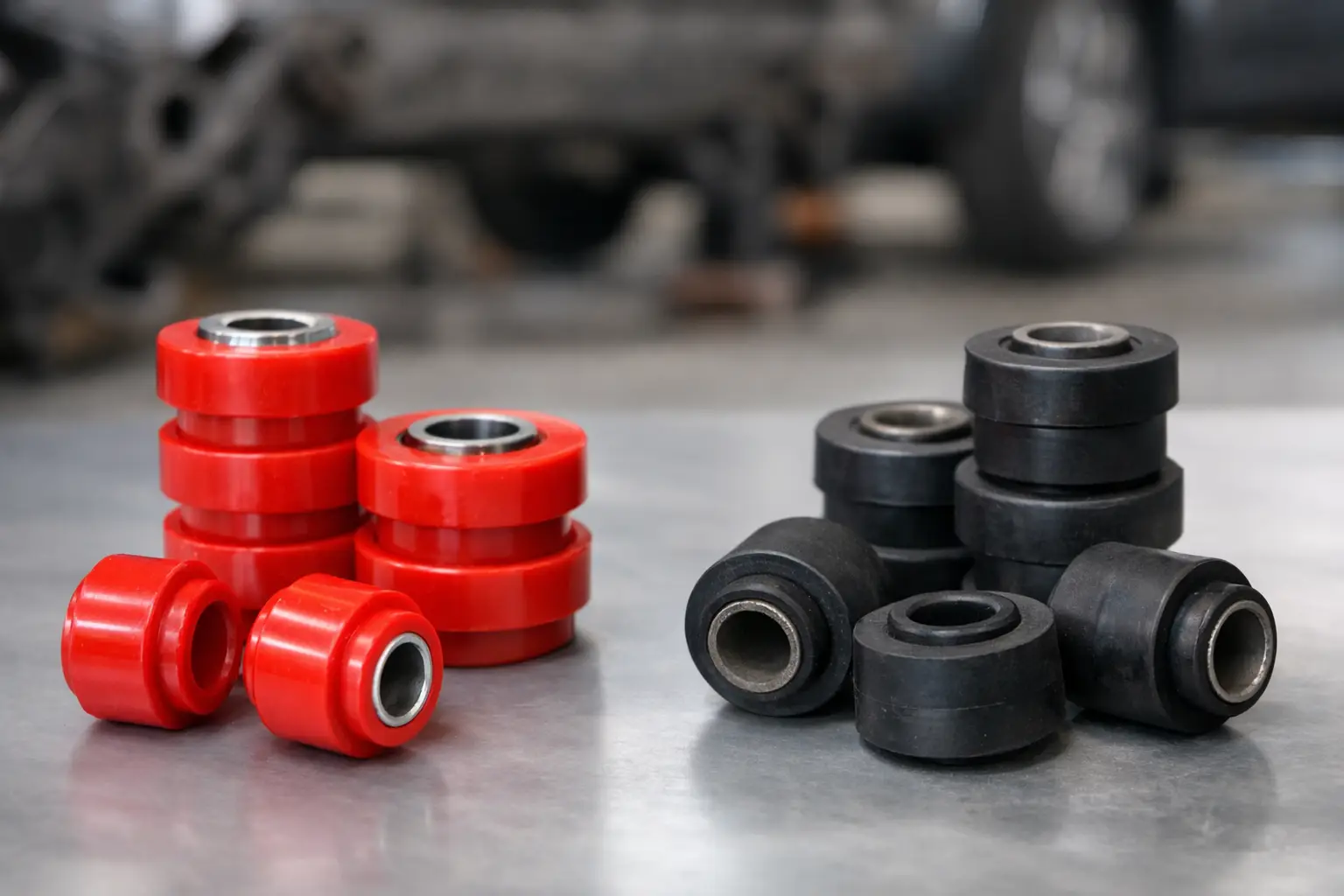
The biggest difference between urethane and rubber is how each material handles movement. Rubber compresses more easily and absorbs vibration better. Urethane is firmer, resists deflection, and tends to hold its shape longer under load.
That sounds straightforward, but the trade-off is what matters. Rubber generally delivers a more factory-like ride. It isolates noise and harshness better, which is why it remains the go-to choice for restorations where original driving character matters. Urethane usually gives the body a more planted, connected feel, but that added firmness can transmit more road texture, squeaks, and vibration into the car.
For many owners, the right answer depends on the goal of the build. A numbers-minded restoration and a pro-touring street car do not need the same thing.
How rubber body bushings behave
Rubber is closest to what these cars were built with from the factory. If you want your Chevelle, Malibu, or El Camino to feel like a well-sorted original, rubber is usually the safer choice. It has the compliance needed to absorb small frame and road irregularities without making the body feel harsh or busy.
That compliance also helps preserve the quiet, solid feel many owners expect from a stock-style restoration. On a cruiser or weekend show car, that matters. You notice it on rough pavement, on bridge joints, and even when closing the doors.
The downside is that rubber can compress and deteriorate over time. Heat, oil exposure, age, and storage conditions all take a toll. Even quality rubber will not feel as rigid as urethane, and if your priority is maximum body control, rubber may seem a little softer than you want.
How urethane body bushings behave
Urethane is favored by owners who want a firmer, more performance-oriented feel. Because it deflects less, it can make the body feel more tightly connected to the frame. Some owners like the sharper response and more direct feedback, especially on cars with upgraded suspension, wider tires, and other handling improvements.
Urethane also resists deterioration differently than traditional rubber. It tends to hold its shape well and can be appealing for long-term durability, particularly on vehicles that see spirited use. For some builds, that extra firmness helps the car feel more precise.
But urethane is not automatically the better upgrade. On a street-driven classic, especially one meant to retain stock manners, the increase in noise and vibration can be disappointing. A-body cars were not engineered around firm body mounts in the way modern performance platforms are. If the rest of the chassis is still relatively stock, urethane can introduce a harder edge that feels out of place.
Which is better for a Chevelle, Malibu, or El Camino?
For most factory-style restorations, rubber body bushings are the better match. They preserve the ride quality these cars were known for and help maintain the original balance between comfort and control. If your goal is authenticity, quiet operation, and dependable fitment, rubber usually wins.
For modified street cars, urethane can make sense if the rest of the car supports that choice. If you have already upgraded springs, sway bars, shocks, and steering components, the firmer body mount may fit the overall direction of the build. In that case, the added feedback may feel intentional rather than intrusive.
The key is being honest about how the car will be used. A weekend cruiser that sees local shows and back-road driving has different needs than a more aggressive street machine. Plenty of owners order urethane thinking it is the obvious performance upgrade, only to realize later they preferred the more composed character of rubber.
Ride quality, noise, and handling trade-offs
This is where the urethane vs rubber body bushings debate becomes practical. Rubber is better at separating the cabin from the frame. That means fewer vibrations through the floor, less rattling from interior panels, and a more relaxed ride. On older cars with aging trim, glass, and weatherstripping, that isolation is often welcome.
Urethane gives up some of that comfort in exchange for firmness. You may notice more road feel through the body, more resonance, and in some cases more squeak potential if installation is not handled carefully. Some drivers consider that acceptable. Others install them once and decide not to do it again.
Handling is a little more nuanced. Body bushings are not a magic fix for poor suspension geometry or worn steering parts. Urethane can help reduce unwanted movement between body and frame, but it will not transform a tired chassis on its own. If your ball joints, control arm bushings, springs, or shocks are worn out, those issues need attention first.
Fitment and installation matter just as much as material
No matter which material you choose, fitment is critical on these cars. A-body body mounts vary by location, and some positions use different bushing shapes or hardware. Installing the wrong kit or mixing worn hardware with new bushings can create problems that have nothing to do with rubber or urethane.
It also pays to inspect the full system while you are in there. Body mount bolts, captured nuts, sleeves, and core support bushings all deserve attention. If the old bushings have been crushed for years, you may uncover alignment issues that only become obvious once the body is properly lifted and supported.
Take your time during installation. Loosen mounts methodically, support the body safely, and do not torque everything down until the bushings are seated correctly. On a restoration-grade build, this is also the right time to check door gaps and front sheet metal alignment. Small corrections here can save headaches later.
When rubber is the smarter buy
Rubber is the smarter buy when originality, comfort, and factory-style road manners are the priority. It suits stock restorations, survivor cars, and cruisers that spend most of their time on public roads. It is also the better choice for owners who are sensitive to added vibration or who simply want the car to feel like a classic GM should.
For many restorers, this is the most satisfying route because it improves the car without changing its personality. That matters more than people think.
When urethane makes sense
Urethane makes sense when the car is already moving away from stock and the owner expects a firmer, more connected feel. It fits best on builds where suspension upgrades, wheel and tire changes, and performance-minded driving are already part of the plan.
Even then, it is worth asking whether the gain is meaningful for your use. On some street cars, the difference feels worthwhile. On others, it just adds harshness.
For A-body owners trying to decide, the best approach is usually the simplest one. Match the body bushing material to the purpose of the car, not the marketing around the material. If you want factory-correct feel, choose rubber. If you are building a more performance-focused car and can accept extra noise and vibration, urethane may be the right fit. And if you need help sorting out the correct components for your specific 1964-72 application, working with a specialist like Classic Parts can save time, guesswork, and the frustration that comes from ordering parts that are close but not quite right.
Fresh body bushings do more than tighten up the chassis – they bring the whole car back into proper relationship with itself, and that is one of those upgrades you feel every time you open the door, hit a bump, or look down the body line.