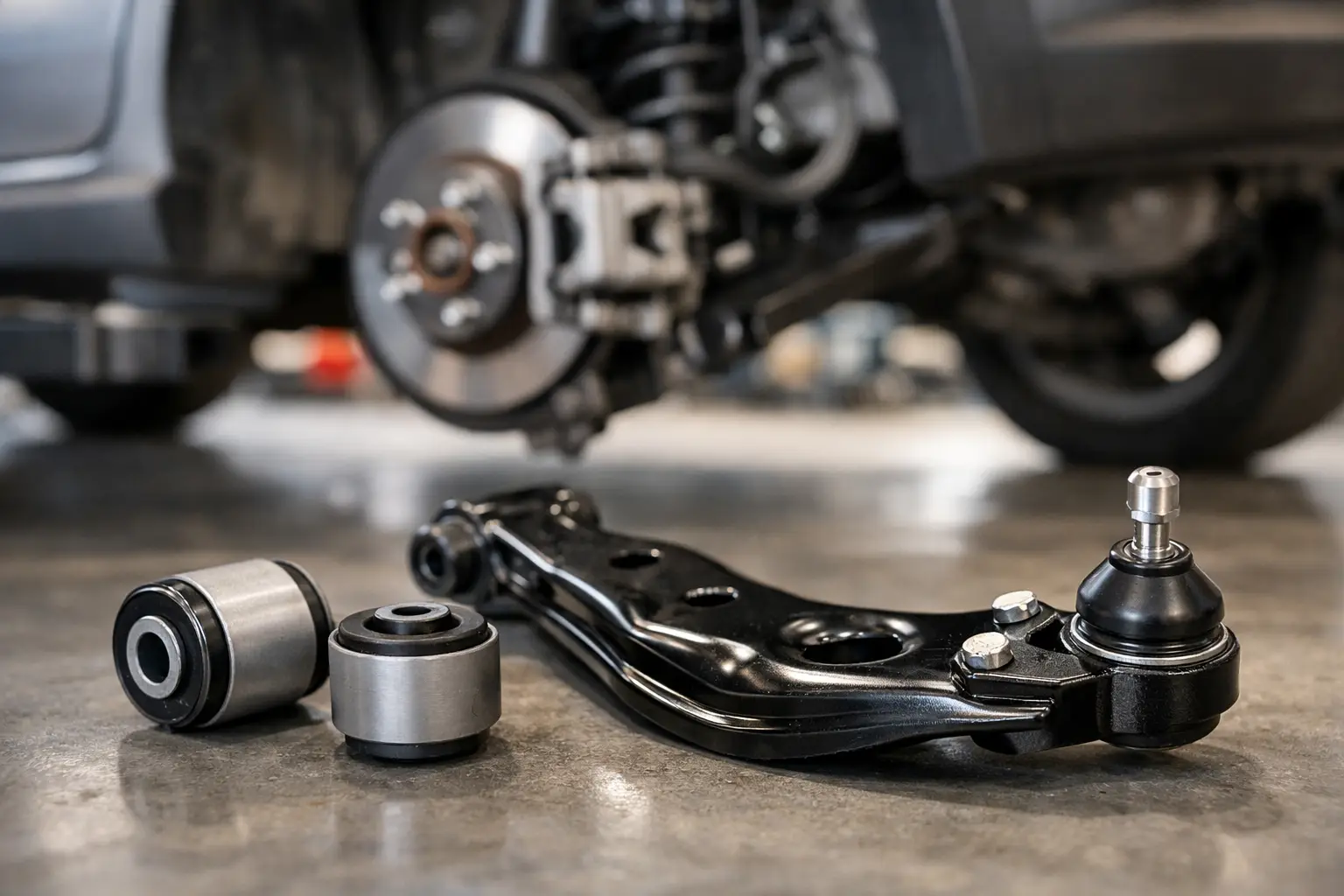
If your Malibu wanders on the highway, clunks over uneven pavement, or chews through front tires faster than it should, the lower control arm bushings deserve a hard look. On 1964-72 GM A-body cars, including the Chevelle, Malibu, and El Camino, these bushings do more than quiet the suspension. They help keep the front end located correctly under braking, cornering, and everyday road shock.
For restorers and drivers alike, this is one of those parts that can make a classic feel tight and confidence-inspiring again, or leave it feeling loose no matter how many other front-end parts have been replaced. And because A-body suspension parts are often mixed, matched, or upgraded over decades of ownership, getting the right bushing setup matters just as much as replacing worn pieces.
What lower control arm bushings actually do
The lower control arm connects the frame to the spindle assembly and allows the front suspension to move through its travel. The bushings at the control arm pivot points act as the cushion and pivot surface between the arm and the frame mount. That sounds simple, but they carry a heavy workload.
They absorb vibration, allow controlled movement, and help maintain suspension geometry as the car accelerates, brakes, and turns. When the bushings are healthy, the front end tracks more predictably and the ride feels composed. When they are worn, cracked, or distorted, the control arm can shift more than it should. That movement changes alignment under load and shows up as vague steering, unstable braking feel, and uneven tire wear.
On a classic Malibu, those symptoms can sneak up slowly. Many owners get used to a little drift or extra play in the steering wheel and assume it comes with the territory. It does not. A properly sorted A-body front suspension should feel solid and honest, even by modern standards.
Common signs your Malibu lower control arm bushings are worn
A bad bushing rarely announces itself with one single symptom. More often, you get a combination of issues that seem unrelated until the front suspension is inspected closely.
The most common complaint is a clunk or dull thud from the front end when hitting bumps or backing out of a driveway. You may also notice the car pulling under braking, especially if one side has more bushing wear than the other. Steering can feel delayed, with the car taking a moment to settle after you turn the wheel.
Tire wear is another clue. If alignment settings will not hold, or the inside and outside edges start wearing unevenly despite fresh tie rods and an alignment, bushings should move higher on the suspect list. During inspection, cracked rubber, separated rubber from the outer shell, or obvious arm movement at the pivot points all point to replacement time.
Age alone is enough reason to inspect them. Even low-mileage originals are still decades old, and rubber hardens with time whether the car is driven regularly or not.
Rubber or polyurethane – what makes sense for your car?
This is where restoration goals matter. If you want factory-style ride quality and original-type compliance, rubber bushings are usually the right choice. They deliver the quieter, more forgiving feel these cars had when new and are often the best match for stock springs, stock steering components, and a period-correct restoration.
Polyurethane bushings are typically chosen by owners who want a firmer response and less deflection. They can sharpen steering feel and reduce suspension movement, but that comes with trade-offs. Poly can transmit more road feel and noise into the cabin, and if the parts are not designed or lubricated properly, squeaks can become part of the deal.
For a mostly stock Malibu that sees street duty, quality rubber is often the sweet spot. For a pro-touring style build or a car with upgraded sway bars, springs, and performance shocks, polyurethane may be worth considering. The right answer depends on how original you want the car to feel and how much comfort you are willing to trade for tighter response.
Why fitment matters on 1964-72 A-body cars
One of the biggest mistakes in suspension work is assuming all A-body front-end parts are interchangeable without checking details. Many are similar, but not every control arm, shaft, or bushing combination is identical across model years and prior repairs.
That matters because your Malibu may not still be wearing the exact control arms it left the factory with. Over the years, cars get donor parts, aftermarket replacements, disc brake swaps, and partial rebuilds. If you are ordering bushings based only on the badge on the fender, you can end up with parts that are close but not correct.
The best approach is to verify the application carefully and inspect the control arms already on the car. If the arms are original, choosing a factory-style replacement is usually straightforward. If they are not, measurements and a trained eye become more important. This is exactly why working with a supplier that specializes in 1964-72 Chevelle, Malibu, and El Camino parts can save time and frustration.
Should you replace just the bushings or the whole control arm?
If your original lower control arms are solid, straight, and free from rust damage around the spring pocket and pivot areas, pressing in new bushings is often the right move. It preserves original components and is usually the better route for stock restorations.
But there are cases where complete replacement makes more sense. If the arm is bent, heavily pitted, previously repaired poorly, or has worn spring seat areas, installing fresh bushings into a bad arm does not solve much. A complete assembly can also be appealing if you want to reduce labor or avoid the hassle of pressing bushings in and out.
There is also the question of originality. Some owners want to retain GM-stamped components whenever possible. Others are more concerned with getting the car back on the road with dependable geometry and fresh hardware. Neither approach is wrong. It depends on the build and the condition of what you have.
Installation realities to keep in mind
Lower control arm bushing replacement is not difficult in theory, but it is serious front suspension work. Coil spring tension, seized hardware, and decades of rust can turn a routine job into a long day in the garage.
The old bushings need to be removed without damaging the arm, and the new ones need to be installed squarely. Just as important, the pivot bolts should be tightened with the suspension at normal ride height, not hanging at full droop. If they are torqued with the suspension unloaded, the bushings can be preloaded at rest, which shortens life and affects ride quality.
An alignment should follow any major front suspension work. Even if you mark everything carefully, fresh bushings change how the control arm sits and moves. Skipping alignment is a good way to waste a new set of tires.
What else should be inspected at the same time?
When the lower control arms are out, it makes sense to inspect the rest of the front suspension honestly. Ball joints, upper control arm bushings, sway bar end links, coil springs, shocks, tie rod ends, idler arm, and center link all influence how the front end feels. Replacing one worn part in a system full of play can improve things, but it may not deliver the result you expect.
This is especially true on cars that have been parked for years. Rubber components age together. If the lower bushings are visibly tired, the upper bushings and other wear items are often not far behind.
For many owners, the smartest move is to plan the front-end refresh as a system rather than chasing one symptom at a time. That approach costs more up front, but it usually saves on repeat labor and gets the car driving right the first time.
Buying bushings with confidence
When you are sourcing suspension parts for a classic A-body, confidence matters. Material quality, correct fitment, and access to knowledgeable support are a bigger deal here than they are on a late-model daily driver. You are not just buying a generic service item. You are buying the part that helps determine how your Malibu feels every time it leaves the driveway.
That is why experienced restorers tend to buy from specialists who know these cars, stock the right combinations, and understand the difference between a factory-correct rebuild and a mild performance upgrade. Classic Parts has spent decades serving 1964-72 GM A-body owners, and that kind of focus matters when the goal is getting the right part the first time.
A fresh set of lower control arm bushings will not turn a neglected front suspension into a brand-new car by themselves. But when they are the missing piece, the change is easy to feel – steadier tracking, cleaner braking, better tire life, and a front end that finally behaves like a proper Malibu should.