A Chevelle steering wheel does more than finish the interior. It sets the tone every time you slide behind the wheel, and for many owners, choosing among the best chevelle steering wheel options comes down to one question – are you restoring the car to factory-correct condition, or building it to suit the way you actually drive it today?
That decision matters because steering wheel choices affect more than appearance. Diameter changes steering effort. Grip thickness changes comfort. Spoke design and horn components change how authentic the interior feels. On a 1964-72 Chevelle, Malibu, or El Camino, the right wheel should match the build, the trim level, and the expectations you have for the car once it is back on the road.
How to choose the best Chevelle steering wheel options
The best choice starts with the car itself. A bench-seat cruiser with a stock column and column shifter usually looks right with a factory-style wheel. A bucket-seat SS clone or pro-touring build can carry something sportier without feeling out of place. Neither direction is automatically better. The right answer depends on whether originality, comfort, or personality ranks highest for you.
Fitment is the first thing to verify. Steering wheel compatibility on A-body GM vehicles can vary by year, column style, horn setup, and whether the car is equipped with standard or optional interior trim. If you are replacing only the wheel, you also need to confirm whether your horn cap, mounting hardware, and canceling cam will transfer over. Many owners assume any 1964-72 GM wheel will bolt on cleanly. Sometimes it will. Sometimes it creates a horn or signal-cancel issue that turns a simple swap into an afternoon of frustration.
Wheel diameter is another factor that gets overlooked. Many original-style wheels are larger, which feels correct in a stock interior and helps on cars without power steering. Smaller custom wheels can sharpen the look, but they also increase steering effort at low speeds. If your Chevelle spends most of its life cruising, parking-lot comfort still matters.
Factory-style wheels for restoration accuracy
For a numbers-minded restoration or a clean stock rebuild, a factory-style reproduction wheel is usually the strongest choice. These wheels preserve the look GM intended and keep the interior cohesive with the dash, seat upholstery, and trim. On 1964-72 cars, that visual consistency is a big part of what makes the cabin feel right.
A standard black reproduction wheel is often the most practical route. It works well for owners who want a correct overall appearance without chasing rare originals or paying premium prices for NOS parts. Reproduction units also remove some of the common headaches tied to original wheels, especially cracks, sun damage, and worn finish around the rim and spokes.
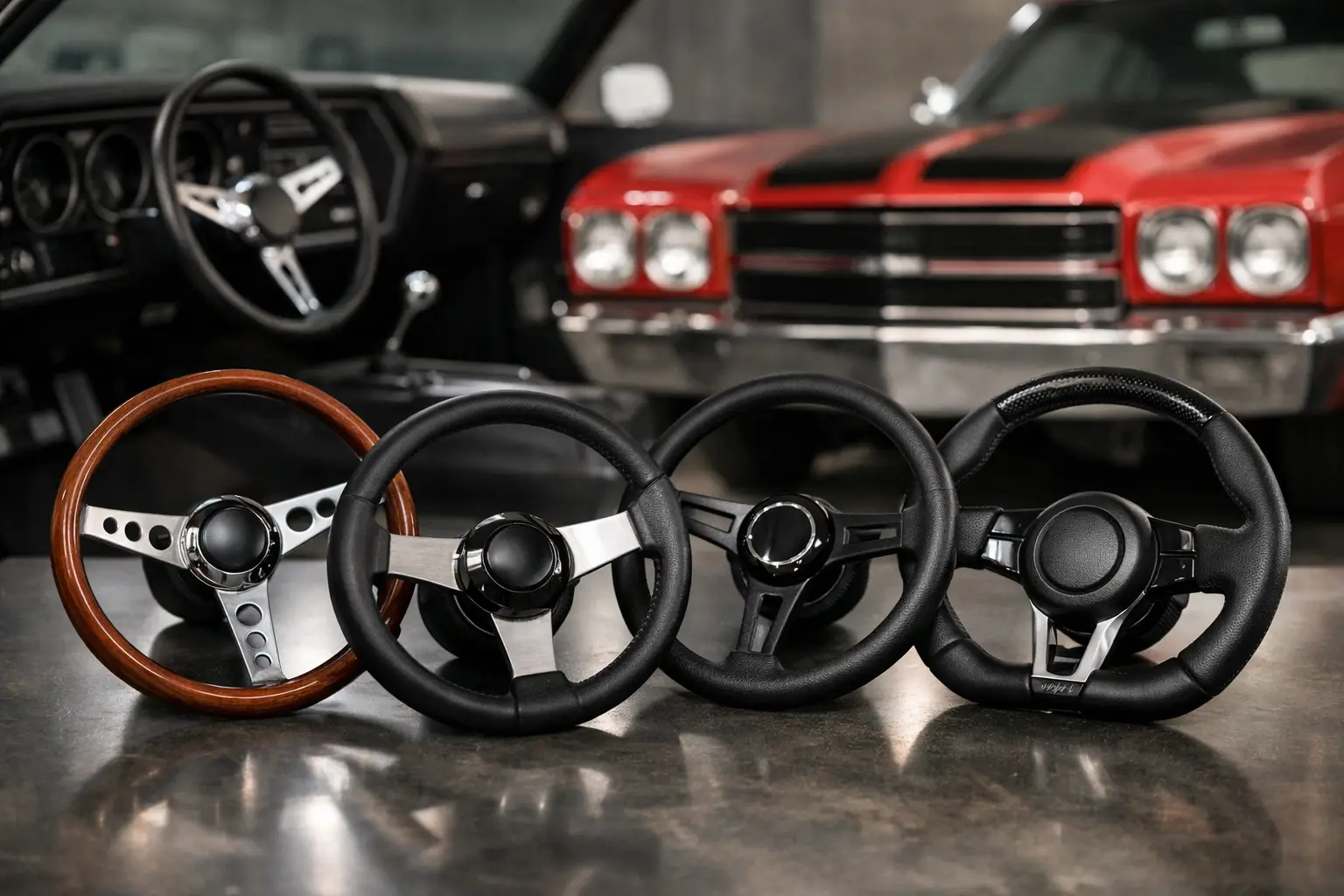
If your car originally had a simulated wood wheel or an SS-style sport wheel, stepping up to the correct upgraded design can make a major difference. Those wheels carry more visual weight in the cabin and tend to feel more special from the driver seat. The trade-off is cost and complexity. Correct horn buttons, caps, trim pieces, and center components often matter just as much as the wheel itself.
Original used wheels have their place too. For some restorers, genuine GM parts still carry an edge in texture, molding detail, and collector appeal. But you need to be realistic about condition. Many originals need cosmetic work, and once repair and refinishing costs are added up, a high-quality reproduction may be the smarter buy.
Sport wheels and SS-inspired upgrades
Among the best chevelle steering wheel options, SS-style and sport-style wheels remain some of the most popular. They offer a factory-performance look without pushing the car into obvious custom territory. On 1968-72 builds especially, they fit naturally with bucket seats, console interiors, and muscle-era trim.
These wheels generally provide a more substantial grip than basic standard wheels, and that improves driver confidence. They also help the interior feel more complete on cars that already carry performance cues like round gauges, floor shifters, or upgraded instrumentation. If your build leans toward an SS appearance package, a plain base wheel can look like an unfinished choice.
The caution here is overcorrecting. Not every Chevelle benefits from a heavy, aggressive wheel design. On a mild Malibu cruiser with a simple interior, an SS-style wheel may feel slightly out of character unless the rest of the car supports it. Balance matters more than following trends.
Woodgrain and simulated wood wheel options
Woodgrain and simulated wood wheels are a strong fit for owners who want an upscale period-correct interior. They add warmth and contrast, especially in black, saddle, blue, or parchment interiors where too much monochrome can make the cabin feel flat. When paired with the right dash trim and console details, they can elevate the entire interior presentation.
That said, not every wood-look wheel delivers the same result. Lower-quality versions can appear overly glossy or artificial, which stands out in a classic GM interior. Grain pattern, spoke finish, and center cap quality all matter. A wheel may look acceptable in a catalog photo but feel wrong once installed next to original or correctly reproduced interior components.
For drivers who actually put miles on their cars, comfort is worth considering too. Some wood-style wheels have a harder feel than molded factory-style wheels. That may be fine for weekend cruise nights, but on a long drive, grip and hand fatigue become more noticeable.
Custom and smaller-diameter steering wheels
If your Chevelle has moved beyond restoration and into street machine or pro-touring territory, a custom wheel can make sense. Smaller-diameter wheels, brushed or polished spokes, leather-wrapped rims, and performance-oriented designs all change the personality of the car immediately. They can also create more leg room, which matters for taller drivers.
This route works best when the rest of the interior supports it. A custom wheel in an otherwise stock interior can look disconnected, especially on a carefully preserved 1966 or 1967 car. But in a build with aftermarket gauges, upgraded seats, modified suspension, and a modernized drivetrain, a custom steering wheel often feels exactly right.
The trade-off is authenticity. Once you move away from factory styling, resale appeal can narrow depending on the buyer. Installation can also require an adapter hub or additional column hardware, so the wheel itself is only part of the purchase decision.
Don’t overlook horn parts, caps, and mounting components
One of the most common restoration mistakes is focusing only on the rim and spokes while ignoring the related hardware. Horn buttons, center caps, emblems, mounting kits, and contact components can be the difference between a wheel that looks finished and one that always seems incomplete.
This is especially true on 1964-72 Chevelles because trim level and steering wheel style often dictate different center details. Even a correct wheel can look wrong if the horn cap design, emblem, or finish does not match the year and model. If your current parts are cracked, pitted, or missing, it usually makes sense to source the full package at the same time.
For many owners, this is where working with a specialist matters. A broad catalog is useful, but practical guidance is what keeps you from ordering a wheel, then realizing later that the horn contact or center trim is not compatible with your column setup.
Which steering wheel option is best for your Chevelle?
If your goal is factory-correct restoration, stay with a year-appropriate reproduction or a clean original wheel matched to the proper center components. That approach protects the car’s character and usually delivers the most satisfying result once the interior is assembled.
If you want a stronger muscle-car look without going fully custom, an SS-style or sport-style wheel is often the sweet spot. It keeps the interior rooted in the era while adding visual impact and a better hand feel.
If your build is more personalized, a smaller custom wheel may be the right choice, provided you are comfortable with heavier low-speed steering and a less original appearance. There is nothing wrong with building the car for the way you use it. The mistake is choosing a wheel based only on style and ignoring how it fits the rest of the car.
At Classic Parts, we have seen this decision go both ways for decades. Some customers want exact factory appearance down to the horn cap details. Others want dependable fit, a clean interior upgrade, and fast access to hard-to-find components that keep the project moving. Both are valid goals.
The best steering wheel for your Chevelle is the one that feels right the moment your hands land on it and still looks right when you step back and see the whole interior together. Choose for the car you are building, not just the part you are replacing.