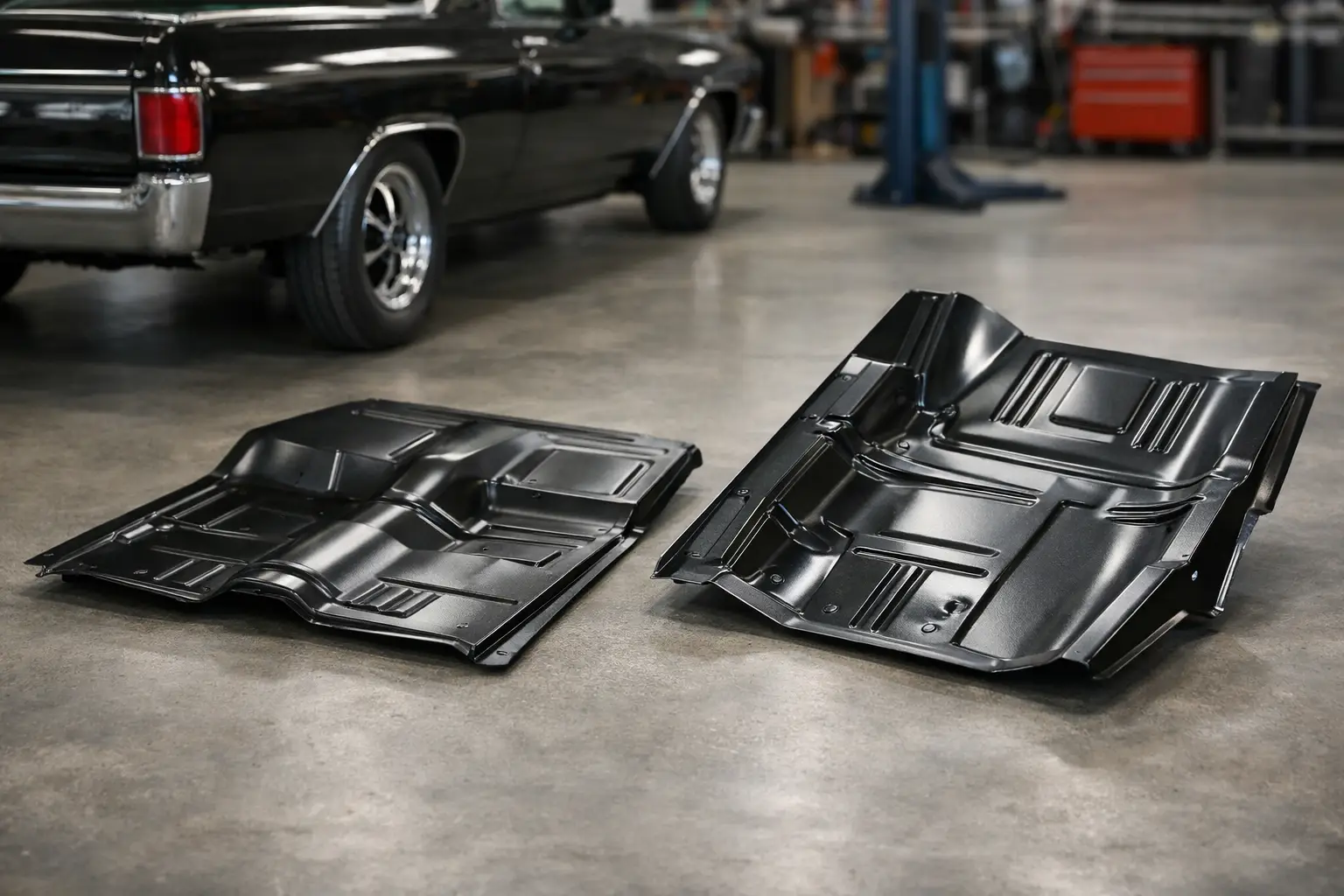
A rusty El Camino floor usually tells the truth about the rest of the truck. Pull the carpet, peel back the insulation, and what looked solid from above can turn into pinholes, soft spots, patch plates over old patch plates, and body mounts you no longer trust. If you are shopping for the best El Camino floor pans, the right choice is not just about fresh metal. It is about fit, structure, factory-correct contours, and how much rework you are willing to accept.
For 1964-72 El Camino restorations, floor pan selection matters more than many owners expect. These A-body platforms share a lot with Chevelle and Malibu models, but not every panel on the market delivers the same stamping quality, gauge consistency, or edge accuracy. A floor pan that is close can still cost you hours in trimming, aligning braces, and correcting seat or body mount locations. Good sheet metal saves time. Great sheet metal saves the restoration.
What makes the best El Camino floor pans
The best panels start with correct shape. That means the ribs, depressions, drain areas, seat mounting points, and transitions to the toe board or rear floor need to match the original floor as closely as possible. If the stamping is soft or the contours are off, the panel may technically cover the hole, but it can create alignment issues with braces, seat tracks, and surrounding sheet metal.
Steel thickness matters too, although fit usually decides whether a panel feels like a smart buy or a compromise. A pan that matches the original structure and welds in cleanly is worth more than one that looks good in a catalog photo but fights you all the way into place. On classic GM A-body vehicles, proper fit around braces and factory seams is where quality really shows up.
You also want to think about coating and finish. Many replacement pans come in a protective black transport coating. That coating helps in storage and shipping, but it is not the same as final corrosion protection. Any serious installation should include cleaning, test fitting, weld prep, seam sealing, epoxy primer, and underbody protection after the repair is complete.
Full floor pans or sectional repairs
This is where the decision usually gets practical. If rust is limited to the front footwells or a rear seat area, sectional panels can make sense. They cost less, preserve more original metal, and reduce the amount of interior and body disassembly. For a driver-quality repair, a well-made section can be the right move.
If the rust extends into braces, seat mounts, multiple seams, or both front and rear floor areas, a full floor or larger one-piece section is often the better investment. It gives you cleaner structural continuity and a more factory-like result. It also avoids stacking repair over old repairs, which is common on vehicles that have already been patched once or twice over the decades.
There is a trade-off. Larger pans usually require more prep, more careful alignment, and more labor during installation. But they can leave you with fewer seams, better long-term rigidity, and a cleaner finished underside. On a higher-end restoration, that matters.
The fitment details that separate good from bad
When restorers ask what the best El Camino floor pans are, they are usually asking one thing in plain language – which ones will fit without turning into a fabrication project.
The best panels tend to have crisp stampings and predictable dimensions. You can line them up against existing seams, braces, rocker areas, and firewall transitions without guessing. That is especially important on 1968-72 El Camino models, where floor contours and braces need to land correctly if you want seats and interior components to go back in without drama.
Lower-quality pans often fail in small but frustrating ways. The ribs may be too shallow. The flanges may require excessive trimming. The panel may sit proud in one corner and low in another. None of that sounds major until you are trying to weld along a rocker seam or install the seat brackets and discover the geometry is slightly off.
A panel does not need to be perfect out of the box to be usable. Most sheet metal work involves some fitting, clamping, and adjustment. But the best reproduction floor pans minimize those corrections and respect the original GM layout.
Best El Camino floor pans for different restoration goals
Not every El Camino build needs the same floor repair strategy. If you are restoring a numbers-conscious vehicle or building for show, close-to-original stamping detail should be high on your list. In that case, larger replacement sections with correct contours usually make the most sense, even if the upfront cost is higher.
For a solid street truck, partial floor pans can be the practical answer if the rust is isolated and the surrounding steel is healthy. The key is being honest about the condition of the braces, body mounts, and adjacent metal. Saving a few dollars on a smaller panel does not help if the floor still flexes or traps moisture in weakened seams.
For a long-term keeper, buy the best panel you can reasonably install. That often means choosing the piece with the strongest reputation for fit rather than the cheapest option available. Labor is expensive, even if your labor is your own. Replacing a badly fitting pan twice costs more than doing it right once.
Common mistakes when buying El Camino floor pans
One of the biggest mistakes is buying by price alone. Budget panels can look similar online, but the difference shows up when you start test fitting. Extra trimming, reshaping, and correcting bad stampings can erase any savings fast.
Another mistake is ignoring the surrounding structure. Floor pans rarely rust alone. Seat braces, cross braces, toe boards, inner rockers, and body mount areas often need attention at the same time. If you replace only the visible floor skin and leave compromised support metal underneath, the repair is incomplete.
It is also easy to order the wrong section for the year range. The 1964-67 and 1968-72 A-body platforms share family traits, but the floors are not all interchangeable in the way some buyers assume. Always verify body style, side, location, and year-specific details before ordering.
Installation quality matters as much as panel quality
Even the best El Camino floor pans can disappoint if they are installed poorly. A proper repair starts with cutting back to sound metal, not simply covering the rust. It also means checking body alignment before final welding, especially on vehicles with significant structural rust.
Test fitting should happen more than once. You want to confirm brace contact, seam position, overlap or butt-weld planning, and seat or interior reference points before committing. Once the panel is welded in, finishing work matters too. Grinding welds is only part of the process. Seam sealer, epoxy primer, sound deadening, and underside protection are what help the repair last.
If you are hiring out the work, ask the shop how they handle braces, corrosion protection inside closed sections, and final sealing. A good installer will talk about structure and longevity, not just surface appearance.
How to shop with confidence
For classic GM A-body restorations, confidence comes from buying from a specialist who understands the platform, not a generic warehouse moving universal inventory. The right supplier can help you sort out year fitment, full versus sectional options, and the related pieces you may need once the old floor is removed.
That support matters because floor pan work tends to uncover more than expected. Once the carpet is out and the cutting starts, you may find braces, hardware, weatherstripping, or interior components that should be addressed at the same time. Working with a source that knows 1964-72 El Camino, Chevelle, and Malibu applications helps reduce delays and second orders.
Classic Parts has built its reputation around exactly that kind of restoration support, with deep inventory for hard-to-find A-body sheet metal and the kind of practical guidance owners need before they strike the first cut.
So what are the best El Camino floor pans, really
The best choice is the panel that matches your year correctly, fits the surrounding structure with minimal correction, and supports the level of restoration you are actually building. For some owners, that means a full floor with factory-style contours. For others, it means a well-stamped front or rear section that repairs isolated rust without replacing good original steel.
What never changes is the standard. Good El Camino floor pans should restore strength, preserve original geometry, and save you from fighting poor fit. When the panel is right, the repair feels straightforward. When it is wrong, every step after that gets harder.
If your El Camino floor is at the point where carpet can no longer hide the problem, treat the repair like a structural job, not a cosmetic one. The truck will feel better, the interior will fit better, and the whole restoration will stand on something solid again.