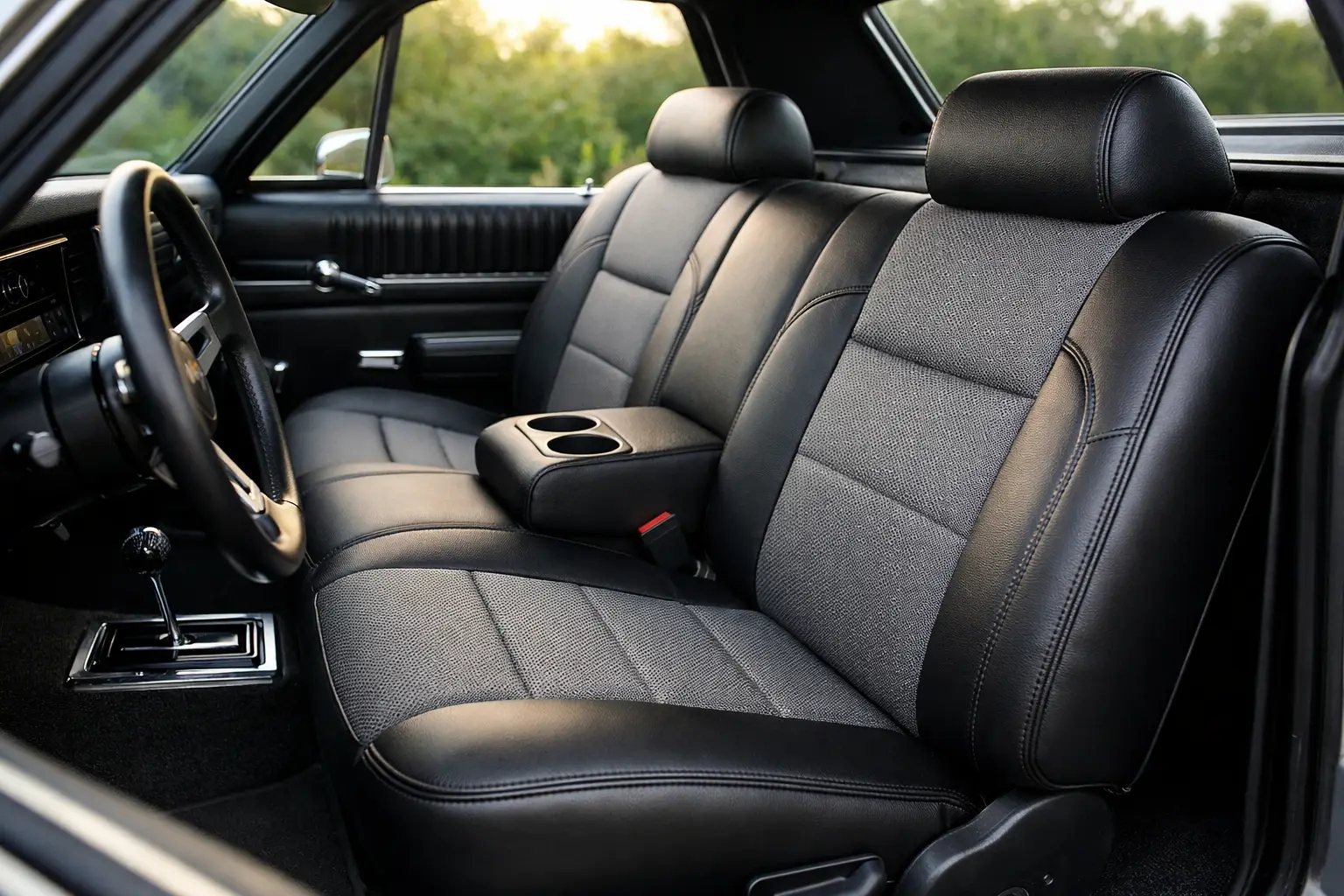
A split seam, sun-baked vinyl, or a seat that has lost its shape can make an otherwise sharp El Camino interior feel unfinished. The best el camino seat covers do more than hide worn upholstery. They restore the correct look, protect the seat structure underneath, and give the cab the factory-minded finish that a 1964-72 GM A-body deserves.
For a driver-quality pickup, a durable replacement cover may be the right answer. For a show-minded restoration, details such as pleat pattern, grain, piping, button placement, and original color matter just as much as material quality. The right choice starts with identifying exactly what is in your El Camino before ordering.
What Makes the Best El Camino Seat Covers?
The best cover is the one that matches your seat frame, your model year, and the level of restoration you are building. That sounds straightforward, but El Camino interiors changed through the years, and many vehicles have received seat swaps or upholstery work during the last five decades.
A quality replacement cover should fit tightly over the original-style foam without excessive pulling, loose corners, or wrinkles across the seating surface. It should also follow the correct panel layout for the seat. A generic universal cover may keep dirt off the upholstery, but it rarely delivers the tailored appearance or lasting security expected in a classic GM restoration.
Correct material selection is equally important. Vinyl is the familiar choice for many El Camino interiors because it is durable, easy to clean, and close to the original feel on numerous factory applications. Cloth inserts can be appropriate on certain trim packages, while leather or custom materials may suit a restomod. The trade-off is simple: custom upholstery can add personal style, but it can move the truck away from factory-correct presentation and may complicate matching other interior components later.
Start With Your El Camino’s Seat Style
Before comparing colors or materials, confirm the seat configuration. This is the step that prevents most costly ordering mistakes.
Bench Seats
Many El Caminos left the factory with a bench seat, but bench designs, patterns, and trim can vary by year and package. Measure the seat width and look closely at the number and direction of pleats. Check whether the seat has an integrated armrest, a folding center section, or features added during a previous restoration.
A cover designed for the wrong bench-seat pattern may appear close in a catalog photo yet fit poorly around the seatback corners or lower cushion. If the old cover is still present, use it as a reference, even if it is torn. It can reveal original stitching lines, piping, and color combinations that are easy to overlook.
Bucket Seats
Bucket-seat El Caminos require even more attention to fitment. The seatback shape, headrest provisions, side-release hardware, and hinge areas all affect which cover will work. Do not assume that a seat from another GM A-body is identical simply because it bolts in. A swapped Chevelle, Malibu, Monte Carlo, or later-model seat may require upholstery intended for that specific frame rather than for the El Camino’s original application.
If you are uncertain whether the seats are original, inspect the tracks, mounting points, and seatback frame before purchasing covers. A few minutes of verification can save hours of installation trouble.
Match the Cover to Your Restoration Goal
There is no single best material for every 1964-72 El Camino. The proper choice depends on how the vehicle will be used and what you want it to represent.
For an original-style restoration, choose covers with factory-inspired grain, correct stitch layout, and period-appropriate colors. This approach supports the value and character of an unmodified truck, especially when the door panels, dash pad, carpet, and headliner are being restored to match. A correct interior has a way of making the entire vehicle feel more authentic, even before the engine is started.
For a regularly driven El Camino, durable automotive vinyl is often the practical favorite. It handles work boots, weekend cruises, kids, pets, and the occasional spilled drink better than many cloth materials. It also cleans easily with mild upholstery cleaner and a soft cloth. In hot climates, though, dark vinyl can become uncomfortable quickly. Lighter shades help somewhat, and a windshield shade is inexpensive insurance for both the seat covers and the dash.
For a custom build, leather, two-tone upholstery, contrast stitching, and upgraded padding can create a more upscale cabin. Just remember that custom work is less forgiving when a single panel needs replacement years later. If long-term serviceability matters, choose materials and colors that will remain available or buy enough material for future repairs.
Do Not Install New Covers Over Bad Foam
Seat covers are only as good as the foundation underneath. Old foam commonly develops soft spots, collapsed bolsters, and deep impressions from years of use. Springs can sag, burlap can tear, and seat frames can rust along their lower edges. Pulling fresh upholstery over these problems may improve the appearance temporarily, but it will not restore comfort or support.
Remove the old covers and inspect the seat frame before installation. Repair broken springs, clean surface rust, and replace worn padding where necessary. If the foam is badly distorted, replacement foam is usually a better investment than trying to build it back up with loose padding. Proper foam gives the new cover its intended shape and reduces strain on the seams.
Also inspect the listing wires and attachment points. Many classic seat covers use hog rings to secure the upholstery to wires embedded in the foam and frame. Reusing weak or rusty hardware can lead to loose material and uneven tension. New hog rings and proper hog-ring pliers make the job cleaner and more dependable.
Installation Details That Affect the Finished Look
Installing seat covers is manageable for an experienced home restorer, but patience matters more than speed. Work in a clean, warm area. Vinyl becomes more flexible when it is warm, which helps it stretch into place without unnecessary force. Avoid excessive heat from a heat gun, since too much can damage the grain or distort the material.
Start by centering the cover before attaching anything permanently. Secure the middle areas first, then work outward evenly from side to side. This keeps the seams straight and prevents a wrinkle on one side from becoming a major alignment problem at the other end. Pull the cover snugly, not brutally tight. Overstretching can stress seams and leave the material fighting the foam rather than sitting naturally over it.
Pay close attention to openings for seat hinges, release handles, and seat tracks. Cut only after confirming the location several times. A small, carefully placed opening can be enlarged if needed; a large incorrect cut cannot be undone. Once the covers are installed, allow them time to settle in a warm garage or during a sunny day before judging minor wrinkles.
Color Matching Is More Than Choosing Black
Black is versatile, but it is not always the correct answer for a classic El Camino. Factory interiors used a range of colors, and the difference between two similar shades can be obvious once the seats sit next to original door panels or a restored dashboard. Blue, green, gold, red, saddle, and white interiors all need thoughtful matching.
Use protected areas of the original interior as your guide whenever possible. The underside of a seat cover, an area behind a trim panel, or the back side of a rear interior piece often shows less fading than exposed surfaces. If the rest of the interior is weathered but serviceable, decide whether you want the new covers to match the faded appearance or whether the project calls for restoring all soft and hard trim to its original color.
Buy From a Specialist Who Understands A-Body Fitment
Seat upholstery is not a place to gamble on a one-size-fits-most solution. A dedicated 1964-72 Chevelle, Malibu, and El Camino supplier can help identify the distinctions that matter, from seat style and model year to related interior pieces needed to finish the job. Classic Parts brings decades of A-body experience to restorers who want dependable fitment and practical guidance instead of guesswork.
Before ordering, have your year, body style, seat photos, measurements, and trim details ready. That information makes it much easier to confirm the correct cover and plan for any foam, hardware, or interior components your project may need.
A well-fitted seat cover is one of the first things you see every time you open the door. Choose one that respects the truck’s original character, supports the way you use it, and makes the driver’s seat feel worthy of the El Camino you have worked hard to preserve.