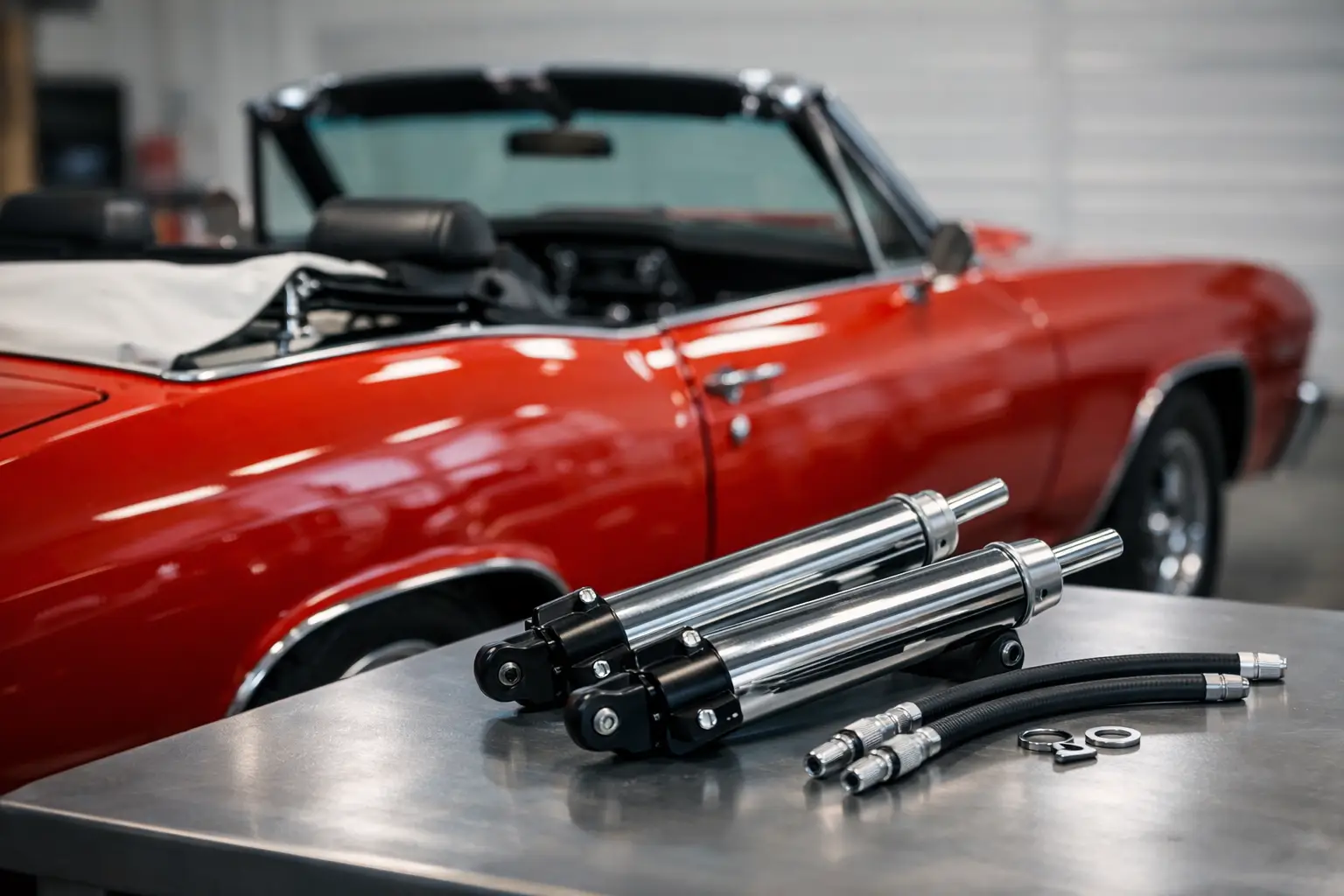
A Chevelle convertible top that lifts unevenly, hesitates halfway up, or leaves fluid where it should not is usually telling you the same thing – the hydraulic system needs attention. In many cases, chevelle convertible top cylinders are the first place to look, because they do the actual work of raising and lowering the top frame every time you hit the switch.
On a 1964-72 Chevelle, Malibu, or El Camino-based convertible setup, the cylinders are simple parts with an important job. They convert hydraulic pressure from the pump into smooth movement at the top linkage. When they are in good shape, the top should move evenly, without binding, jerking, or one side lagging behind the other. When they begin to fail, the symptoms are usually easy to feel long before the top stops working completely.
What chevelle convertible top cylinders do
The hydraulic pump pushes fluid through hoses to each cylinder, one on each side of the car. As pressure builds, the cylinder rod extends or retracts and moves the top mechanism through its travel. It is a straightforward system, but it depends on the cylinders sealing properly and moving at the same rate.
That last part matters more than many owners realize. If one cylinder is weak, leaking internally, or physically worn, the top can twist slightly during operation. Over time, that uneven movement can add stress to the top frame, pivot points, hoses, and even the material on the top itself. A bad cylinder is not just an annoyance. It can turn into a more expensive repair if ignored.
Common signs your cylinders need replacement
The most obvious symptom is fluid leakage. If you remove the rear seat area or inspect around the quarter trim and find hydraulic fluid, the cylinders are strong suspects. Wetness near the cylinder body, rod seal, or hose connection usually points to a leak that will only get worse.
Slow movement is another common complaint. If the pump runs but the top barely moves, weak cylinders may be bypassing fluid internally. In some cars, one side rises before the other. That uneven action is often caused by one cylinder losing efficiency while the other still has enough pressure to move normally.
You may also notice the top drifts down after being raised, or does not stay where it should during the cycle. That can signal seal wear inside the cylinders. Age is a major factor here. Even if the car has been stored carefully, original or decades-old hydraulic parts eventually harden, dry out, and lose sealing ability.
Why replacement usually makes more sense than trying to save old units
For most restorers and drivers, replacing both cylinders as a matched pair is the right move. You can sometimes get one working side and one failed side, but mixing a fresh cylinder with an old one often leads to uneven performance. The older unit may still function, yet it may not operate with the same speed or internal pressure control as the new one.
There is also the issue of reliability. If one cylinder has started leaking after years of service, the other is often not far behind. Replacing both at once saves time, avoids repeat disassembly, and gives you a better chance at smooth, balanced operation.
This is especially true on cars where interior trim, rear seat components, and side panels have to come out for access. Doing the job twice because one original cylinder was left in place is not much of a bargain.
Fitment matters on 1964-72 applications
Not every convertible hydraulic part should be treated as universal just because it looks similar in a catalog photo. On Chevelle and Malibu convertibles, correct fitment matters at the mounting points, hose attachment, stroke length, and overall geometry of the rod movement.
A cylinder that is close but not correct can create small alignment issues that become big problems once the top starts cycling. Mounting eyelets may not sit properly. Hose routing can end up strained. The top may not fully retract or fully raise without binding the frame. Those are the kinds of problems that frustrate owners because the system almost works, but never works right.
That is why sourcing parts from an A-body specialist matters. A general restoration supplier may offer broad coverage, but a company that works with Chevelle-specific components every day is more likely to understand the small differences that affect installation and operation.
Reproduction vs. original-style replacement
Most owners shopping for chevelle convertible top cylinders are looking at reproduction replacements, and in many cases that is the practical choice. A quality reproduction cylinder can restore proper function and preserve an original-style operating feel without the uncertainty that comes with old used parts.
Used original cylinders may appeal to purists, but hydraulic parts are not like trim or brackets. Age alone works against them. Even if a used cylinder looks clean, internal seals can still be brittle or near failure. Unless a part has been professionally rebuilt and tested, it is hard to know what you are getting.
The right decision depends on the goal of the car. A high-point restoration may push you toward original-style appearance and factory-correct details. A driver-quality restoration may put more value on dependable performance and availability. Neither approach is wrong. What matters is choosing a part that fits properly and works consistently.
Don’t ignore the rest of the system
Cylinders are often the problem, but they are not always the only problem. If you are already opening up the system, inspect the hoses and pump as well. Old hoses can seep, crack, or collapse internally. A weak pump can mimic cylinder trouble by failing to build the pressure needed for smooth operation.
Contaminated fluid is another issue that gets overlooked. Dirty or degraded hydraulic fluid can shorten the life of new components. If the old cylinders have leaked or broken down internally, flushing the system and starting with clean fluid is a smart move.
You should also inspect the top frame pivots and linkage points. A binding frame can make good cylinders look bad. If the mechanism is dry, bent, or dragging, the hydraulic system has to work harder than it should. Sometimes the fix is not just replacing parts, but restoring the whole system to proper operating condition.
Installation realities for garage restorers
Replacing cylinders is a manageable job for many experienced hobbyists, but it is not something to rush. Access can be tight, especially around interior trim and mounting points. Taking photos before disassembly helps, particularly with hose routing and hardware orientation.
Protect the interior before you start. Hydraulic fluid can stain upholstery and painted surfaces, and classic cars deserve better than an avoidable mess. It also helps to cycle the system carefully after installation and verify both sides move evenly before buttoning everything back up.
If the top frame is out of alignment before you begin, new cylinders may not solve the issue by themselves. The hydraulic components can only do their job if the frame geometry is correct. That is one of those cases where parts and adjustment go hand in hand.
What buyers should look for before ordering
The best replacement parts are not just about price. You want confidence in fitment, construction quality, and support if questions come up during installation. For a specialty system like a Chevelle convertible top, that support has real value.
Look for a supplier with proven experience in 1964-72 GM A-body restoration, not just a large generic catalog. Accurate application coverage, dependable inventory, and knowledgeable help can save a lot of time when you are matching parts to a specific year and model. That is one reason restorers continue to rely on specialists like Classic Parts when they want factory-correct solutions and practical guidance from people who know these cars.
It also pays to think beyond the immediate repair. If your cylinders have failed, consider whether you should replace hoses, service the pump, or refresh mounting hardware at the same time. It is usually easier and more cost-effective to handle the system together than to chase one aging component after another.
A Chevelle convertible should raise and lower its top with confidence, not guesswork. When the hydraulic system is right, the car feels the way it should – well-sorted, properly restored, and ready to enjoy. If your top has started acting up, fresh cylinders are often the repair that brings the whole system back to life and lets you get back to the part that matters most: driving the car with the top down.