If your side glass chatters, drags, or leaves a gap where it used to sit snug, el camino window felts replacement is usually the fix that brings the doors back to factory-style function. On a 1964-72 El Camino, worn felts do more than make noise. They let dirt into the window channel, speed up glass scratches, and make an otherwise solid restoration feel unfinished every time you roll the window up.
Why window felts matter more than most owners expect
Window felts are one of those parts that rarely get attention until they are completely worn out. They sit at the top of the door and quarter window openings, guiding the glass while helping keep debris and moisture out. When they are fresh, the window moves with light, controlled resistance. When they are tired, the glass can rattle, tilt, bind, or scrape.
That matters on any restoration, but it matters even more on an El Camino because so much of the vehicle’s feel comes from how tightly the doors, glass, and seals work together. A fresh paint job and nice interior trim do not hide a window that clacks around in the door. If you are aiming for an original-style result, replacing old felts is basic but essential.
Common signs you need el camino window felts replacement
The obvious sign is visible wear. If the fuzzy material is missing, flattened, or separating from the metal backing, they are done. In many cases, though, the symptoms show up before the damage is easy to see.
A noisy window is one clue. So is glass that feels loose when partially lowered. If the glass leaves light scratches, especially vertical lines, the felts may no longer be cushioning and guiding it properly. You may also notice extra wind noise, inconsistent sealing at the top, or a window that suddenly needs more effort from the regulator.
Sometimes owners blame the regulator or the glass adjustment first, and those parts can absolutely be part of the problem. But on many 1964-72 GM A-body doors, deteriorated felts are the starting point. Once they lose shape, the rest of the system has a harder job.
What parts are usually involved
On most El Camino applications, window felt replacement is not just one strip and done. There are inner and outer door felts, and depending on the year and body configuration, there may also be related channel seals, run channels, anti-rattle pieces, and hardware worth addressing at the same time.
This is where buying by exact year and model matters. Small differences in body style, trim, and production year can affect fitment. A part that is close is not good enough when it has to align with the contour of the door top and hold the glass correctly. A proper factory-spec replacement saves time, frustration, and the temptation to force something into place.
If your car is apart for paint or door work, it is smart to inspect the full window system while you are there. Fresh felts paired with badly worn channels or loose rollers can improve things, but they will not completely mask other worn components. Restoration work usually goes best when you address the full source of the problem instead of the noisiest symptom.
Reproduction vs. original-style parts
For many owners, the question is not whether to replace the felts. It is which type to buy. In the classic GM world, that usually means deciding between reproduction parts and, in some cases, NOS or quality used components for related trim and hardware.
Good reproduction window felts are the right answer for most drivers and restorations. They offer fresh materials, correct basic appearance, and dependable function. The key is getting parts built for your exact El Camino application rather than generic strips that promise universal fit.
If you are restoring a higher-end car and want details that are as close to assembly-line appearance as possible, you may care about backing shape, staple style, bead profile, and finish. That is where working with a true A-body specialist helps. Fit and appearance can vary from one source to another, and the difference shows once the glass is installed.
There is also a trade-off to keep in mind. The softest material is not always the longest-lasting, and the tightest fit is not always the easiest to install. Most owners want the middle ground – authentic look, solid durability, and smooth operation without hours of reshaping or modifying.
What to check before you order
The biggest mistake in el camino window felts replacement is ordering parts before confirming what is already in the door. Over the years, many El Caminos have had door swaps, mixed trim, aftermarket hardware, or previous repair work that changed what should be there.
Start with the model year and body details. Then inspect the doors for any signs of prior modification. Compare the existing felts, mounting points, and trim attachment style to the parts you plan to install. If your door top moldings or reveal trim are bent, loose, or missing clips, handle that at the same time. New felts deserve a clean mounting surface and correct hardware.
It is also worth checking the glass itself. If the edges are chipped or the surface is already deeply scratched, replacing the felts will stop further damage, but it will not undo what is there. Likewise, if the regulator has slop or the stops are misadjusted, expect to spend some time dialing the window back in after installation.
Installation realities in the garage
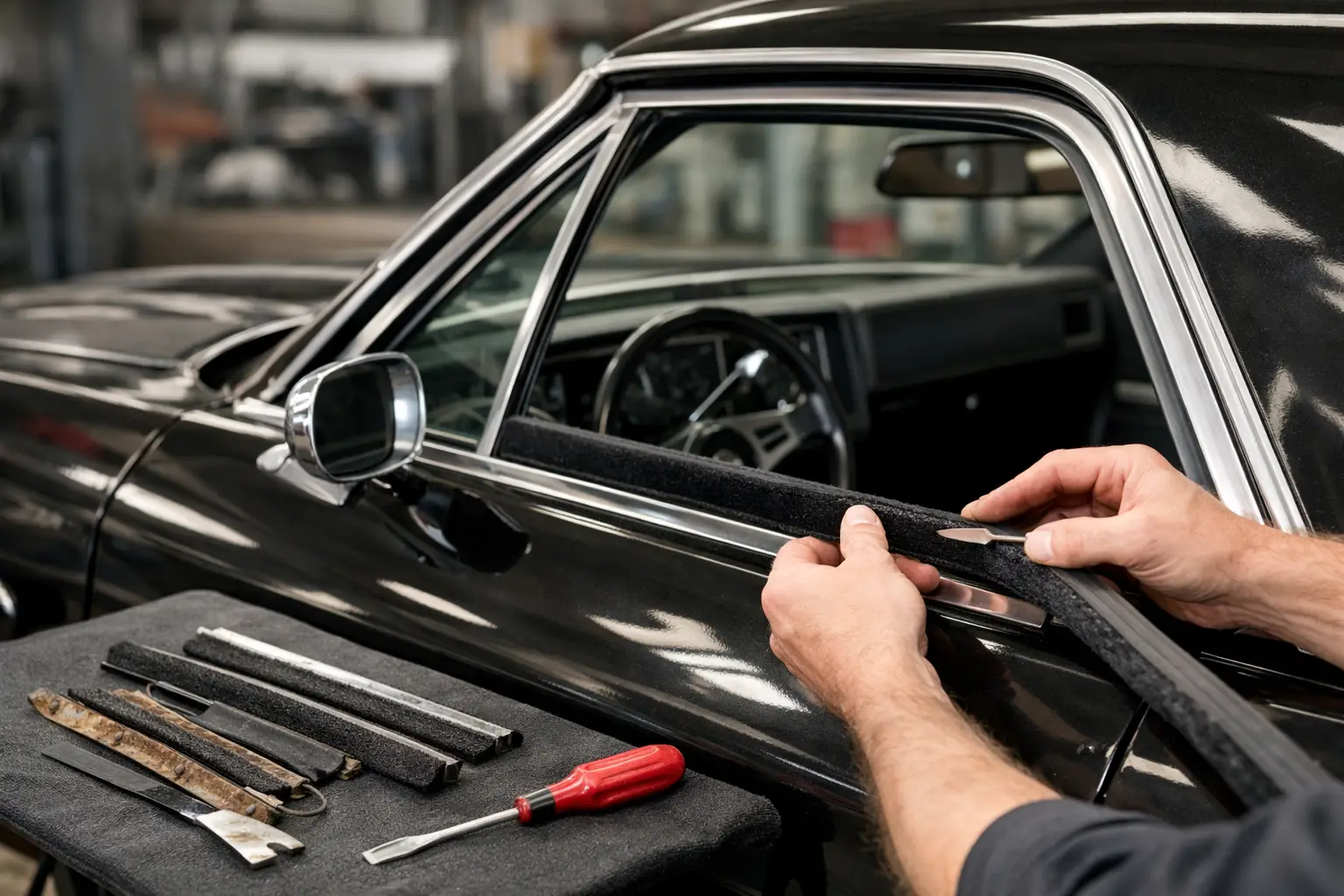
Window felt installation is straightforward compared with major body or drivetrain work, but it still rewards patience. Removing trim without damaging it is often the hardest part, especially on original cars where clips have not moved in decades. If the old felts have rusted staples, hardened rubber, or bent retaining strips, cleanup can take longer than the actual installation.
Test-fitting matters. You want the felt to sit evenly along the door contour without waviness or gaps. Once installed, the window should travel with light contact, not excessive drag. If the glass binds, stop and find out why. Forcing the regulator against a misaligned felt can create a whole second repair.
This is one of those jobs where the condition of surrounding parts changes the experience. On a clean, solid door with decent hardware, the install can be satisfying and quick. On a door with old adhesive, rust scale, bent trim, and worn channels, the same job becomes a mini restoration. That does not mean the parts are wrong. It usually means the door has been asking for attention for a long time.
Why fitment support matters
Classic A-body owners know the difference between a general parts seller and a real specialist. With window felts, that difference shows up fast. Correct fitment is not just about whether the part bolts on. It is about whether the glass tracks right, the trim lines up, and the car feels finished when the job is done.
That is why many restorers prefer sourcing these parts from a dedicated supplier with deep 1964-72 Chevelle, Malibu, and El Camino coverage. When a company has spent decades helping owners sort through exact applications, hard-to-find weatherstripping, and the related clips and hardware, you spend less time guessing and less money reordering.
Classic Parts has built its reputation around that kind of focused support. For El Camino owners, that means access to a large inventory, factory-style replacement parts, and guidance rooted in the platform instead of generic catalog copy.
When it makes sense to replace more than the felts
If your truck is already apart, this is the moment to think bigger than one wear item. Window felts work as part of a system that includes channels, seals, regulators, rollers, stops, and door hardware. Replacing only the felt can be the right move on a well-kept driver, but on a full restoration, it usually makes sense to refresh anything that affects window alignment and sealing.
The payoff is not just smoother operation. It is less wind noise, better water management, improved glass stability, and a door that feels tight instead of tired. Those are the details that separate a car that looks restored from a car that actually feels restored.
A clean set of new felts will not grab headlines at a show, but every time the glass rolls up straight and seals the way it should, you will notice it. On an El Camino, that kind of correctness is never a small thing.