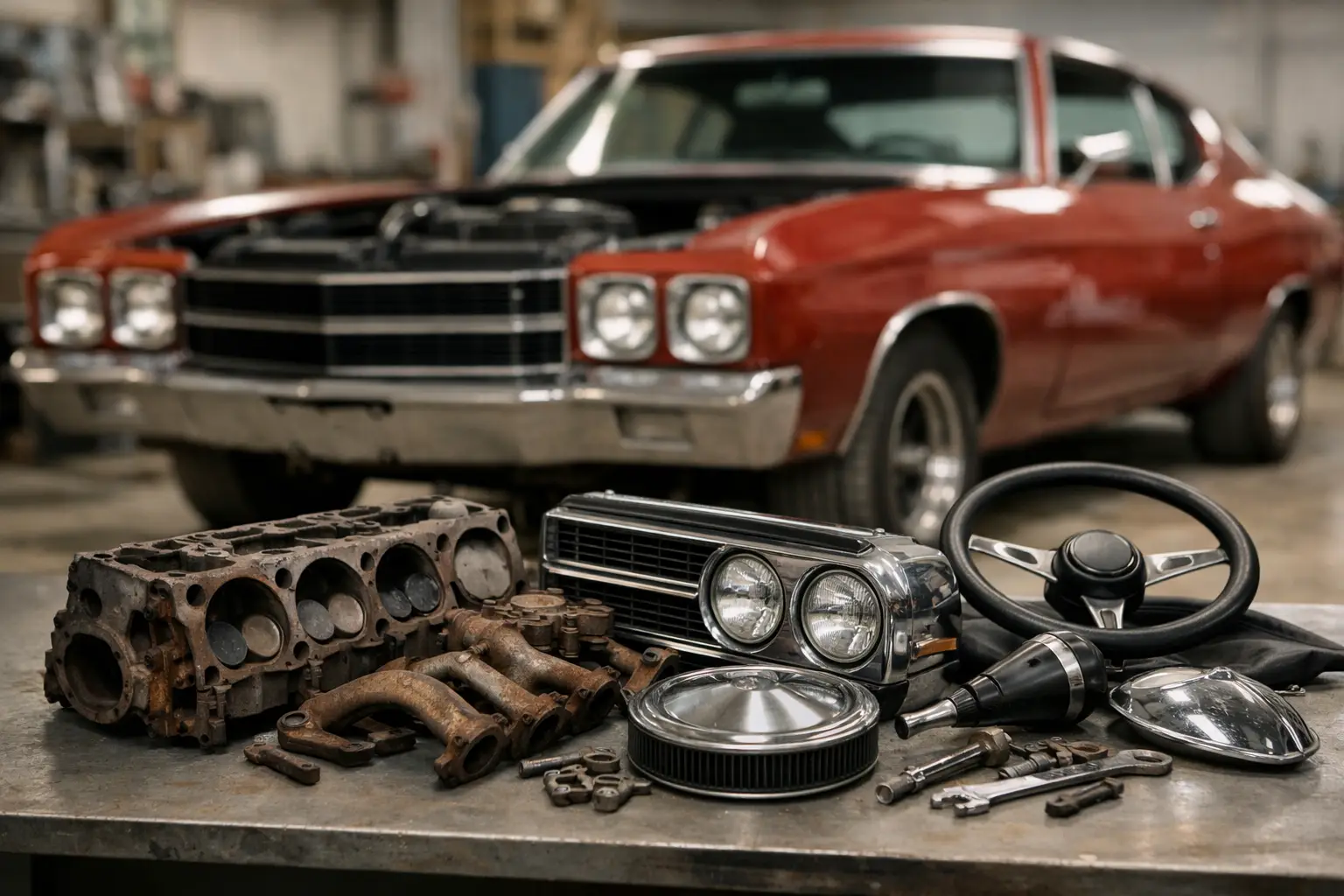
A Chevelle restoration usually gets real when the easy parts are already spoken for. You can buy fresh weatherstripping, bolt kits, and reproduction trim all day long, but when you need an original bracket, a correct dash component, or a factory GM piece with the right shape and stampings, used Chevelle parts for restoration start to matter fast.
That is especially true on 1964-72 Chevelle, Malibu, and El Camino builds where originality, fit, and factory appearance still drive buying decisions. Used parts are not just a budget option. In many cases, they are the right option. The key is knowing where used parts make sense, where reproduction or NOS is the better call, and how to judge condition before you spend money.
When used Chevelle parts for restoration make the most sense
Not every restoration needs the same buying strategy. A numbers-conscious concours build and a clean driver-quality restoration are going to make different decisions. Still, used parts often earn their place for one simple reason – original GM pieces tend to fit the way the car was built.
That matters with trim, brackets, dash hardware, seat tracks, convertible framework pieces, and other components where small differences in shape or hole placement can turn installation into a headache. A used factory part may need cleanup, plating, or refinishing, but it often saves time because the base piece is correct.
Used parts also help when reproduction availability is limited. Some components are simply hard to find new, and some reproductions are good enough for a driver but not right for a restoration where factory appearance matters. If you are chasing original performance, proper fitment, or a stock-correct look, a solid used part can be the smartest buy on the list.
Which parts are usually good candidates to buy used
The best used parts are the ones that keep their structure over time and can be restored without risking reliability. Interior trim pieces, dash assemblies, original bezels, non-wear brackets, pedal assemblies, seat frames, window regulators, vent assemblies, and many exterior moldings can all be strong used-part candidates if the core is sound.
Original glass, convertible top frame components, hard-to-find pulleys, factory accessory brackets, and certain chassis hardware also fall into that category. These are parts where original geometry matters and where a restorable core can still provide long-term value.
Sheet metal is more situational. A rust-free original fender or door can be better than a reproduction panel if it is genuinely solid and has not been heavily repaired. But condition is everything. A panel with hidden rust, stretched metal, or poor prior bodywork can cost more in labor than a new replacement piece.
Drivetrain parts depend on your goals. Original cores can be worth buying if you are rebuilding to factory spec, but wear items are another story. An original carburetor body or intake manifold may be desirable. Internal engine components, brake hydraulics, fuel system soft parts, and electrical wear items usually belong in the new or professionally rebuilt column.
What you should usually buy new instead
Restoration success comes from knowing where not to gamble. Rubber products, weatherstripping, brake components, fuel hoses, bushings, body mounts, wiring prone to age failure, and safety-related pieces are rarely worth buying used. Even if a used part looks acceptable, age alone works against it.
The same logic applies to many suspension parts unless you are starting with a rebuildable original core. Springs, shocks, steering linkage wear items, and electrical switches are usually better purchased new if dependable operation matters to you, and it should.
This is where a balanced parts plan pays off. The best restorations are rarely all-used or all-reproduction. They combine strong original components where authenticity counts with fresh replacement parts where safety, function, and service life matter more.
How to evaluate used Chevelle parts before you buy
Condition is everything, but condition is not just about appearance. A part can look rough and still be excellent if it is complete, straight, and restorable. Another part can look clean in photos and still be wrong, damaged, or missing the details that make installation possible.
Start with fitment. Chevelle, Malibu, and El Camino parts changed across body styles, trim levels, and production years, and some parts that look similar are not interchangeable without modification. Confirm the exact year range, body application, mounting points, and any factory option differences before calling a part correct.
Then look at completeness. A used regulator without the correct hardware, a dash bezel with broken tabs, or a trim piece with hidden pitting can become expensive once you track down the missing details. Ask whether the part includes brackets, clips, fasteners, lenses, or mechanisms if those pieces are needed for installation.
Next comes damage. On trim and die-cast pieces, pitting, corrosion, and edge damage matter. On interior parts, look for warping, cracks, sun damage, and broken mounting points. On sheet metal, inspect flanges, seams, lower corners, and common rust areas, not just the broad visible surface. If a part has been repaired before, the quality of that repair matters as much as the original condition.
Finally, think about restoration cost. A cheaper used part is not automatically the better value if you will spend heavily on refinishing, replating, straightening, or labor to make it serviceable. The right question is not whether the used part is cheaper today. It is whether it gets you to a better finished result for a reasonable total cost.
Why original used parts still matter on a serious build
There is a reason experienced restorers still hunt original GM components. Factory parts often carry the right contours, grain patterns, stampings, and proportions that reproduction parts do not always duplicate perfectly. On a car as visible and as well-known as a Chevelle, small differences stand out.
That does not mean reproduction parts are second-rate across the board. Many are excellent and solve real sourcing problems. But there are still areas where original used parts have an edge, especially if your priority is factory-correct appearance or if you want to minimize fitment surprises during assembly.
For many owners, it comes down to confidence. When you source from a specialist with real category depth, used parts are not random leftovers. They become part of a restoration strategy built around authenticity, availability, and getting the car back together without chasing five different vendors for one missing item.
Building a smart parts mix for your restoration
The best approach is to treat the car by system, not by emotion. Use quality new parts where age creates risk. Use reproduction parts where they offer dependable fit and save time. Use NOS where originality and condition justify the cost. And use used parts where factory GM cores still beat the alternatives.
For a typical Chevelle restoration, that often means new weatherstripping, hardware, and service items paired with used brackets, trim, interior metal, regulators, original assemblies, or rare application-specific pieces. If you are restoring a convertible, the same logic applies even more strongly because framework and specialized components can be difficult to source correctly.
This is also where working with a niche supplier matters. A specialist in 1964-72 GM A-body vehicles can often help you sort through whether a used original part, a reproduction replacement, or an NOS piece is the better answer for your exact build. That kind of guidance saves money, but more important, it saves time and rework. Classic Parts has built its reputation around that kind of practical support, backed by one of the deeper inventories in this category.
Buy with your end goal in mind
A weekend driver, a show car, and a factory-correct restoration do not need the same parts list. If your goal is a dependable car you can enjoy, a mix of used and new parts is usually the sweet spot. If your goal is judged originality, used factory parts may deserve a bigger role, even when they require more cleanup and patience.
The smartest buyers stay honest about the finish line. They do not overpay for originality where no one will ever see it, and they do not cut corners on parts that affect safety, reliability, or visible fit and finish. Used Chevelle parts for restoration are valuable when they solve a real problem – correct fit, hard-to-find availability, or authentic factory appearance.
If you buy that way, the car comes together with fewer surprises, better-looking results, and a lot less frustration once the boxes are open in the garage.