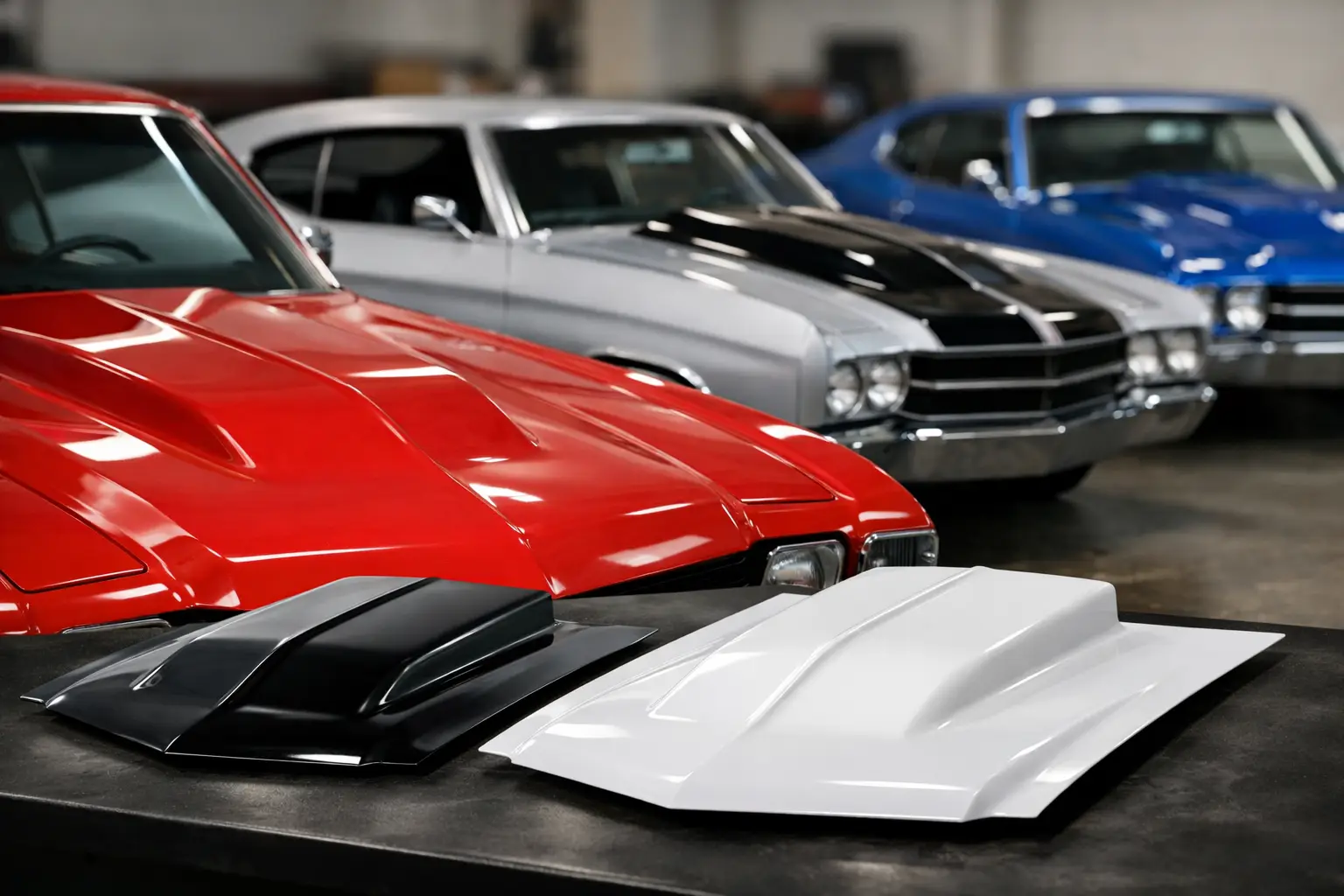
A Chevelle hood can look close enough at a glance to fool a lot of people, right up until the rear edge sits high at the cowl or the front corners refuse to line up with the fenders. That is usually when the real question shows up: which Chevelle cowl hood fits your specific car? On 1964-72 GM A-body cars, the answer depends on more than the hood rise. Year range, body style, hinge alignment, latch location, and whether the car is a Chevelle, Malibu, or El Camino all matter.
Which Chevelle cowl hood fits by year?
The first thing to know is that Chevelle hood fitment follows the major body changes in the A-body platform. A cowl hood is not a universal 1964-72 part, even if the basic outline looks similar in pictures.
For 1964 and 1965 models, hood fitment is specific to that early body style. Those cars share core front-end architecture, but you still want a hood built for 1964-65 applications. A later cowl hood will not bolt on and align correctly without substantial modification, and that defeats the purpose if you want dependable fit and factory-style body lines.
For 1966 and 1967, the hood family changes again. These years are commonly grouped together, and a cowl hood made for 1966-67 Chevelle or Malibu applications is the correct starting point. The front clip dimensions and hood contours differ from both the 1964-65 cars and the 1968-72 body styles.
For 1968, 1969, 1970, 1971, and 1972, things get a little more nuanced. These cars are part of the later A-body generation, but not every hood swaps cleanly across all five years. The hood shape, leading edge, and surrounding front sheet metal changed enough that you need to match the hood to the correct year grouping, not just the broader generation.
1968-69 versus 1970 versus 1971-72
If you are working on a 1968 or 1969 Chevelle, you generally need a cowl hood built specifically for 1968-69. Those two years share key front-end dimensions and styling details, but they do not use the same hood as a 1970 car.
A 1970 Chevelle hood is its own category. The front end on a 1970 model is unique, and that means the hood is too. This is one of the most common fitment mistakes because 1970 is close enough visually to later Chevelles that some buyers assume interchangeability.
For 1971 and 1972, the hood fitment groups together again in most cases. A cowl hood designed for 1971-72 applications should fit those years properly when paired with the correct hinges, latch, and surrounding body panels in good condition.
Body style matters more than many buyers expect
When people ask which Chevelle cowl hood fits, they are often thinking only about the badge on the grille. In practice, you also need to confirm body style. A Chevelle coupe, sedan, wagon, convertible, and El Camino can share a platform, but front clip details and intended fitment still need to be checked carefully.
Chevelle and Malibu fitment is usually discussed together because Malibu is part of the Chevelle line for many of these years. If the hood is listed for the correct year Chevelle or Malibu, that is usually straightforward. El Camino fitment can overlap with Chevelle in many year ranges because it shares A-body roots, but you should never assume it without confirming the application.
That point matters most with reproduction sheet metal. A hood can be marketed broadly, yet still require slight adjustment depending on body style, hinge wear, or prior collision repair. On a 50-plus-year-old vehicle, original factory dimensions are not always what is sitting in your garage today.
What a cowl hood changes and what it does not
A cowl hood raises the rear section of the hood, usually for engine clearance and the more aggressive SS-style look many owners want. It can help with clearance for taller intake setups, carburetors, or aftermarket air cleaners, but it does not cancel out the need to measure your engine combination.
That is where many fitment conversations get crossed. One question is body fitment – will the hood physically match the car? The other is underhood clearance – will it clear your intake, carb, spacer, or air cleaner? A hood can fit the fenders and cowl perfectly and still contact your air cleaner.
If your build includes non-stock engine components, measure from the carb flange or intake mounting surface to the highest point of the air cleaner. Then compare that to the hood’s advertised rise and internal bracing clearance. Not every 2-inch or 4-inch cowl hood is built the same internally.
Reproduction fitment is usually good, but not magic
A quality reproduction cowl hood for the correct year range should save time and give you the look and function you want. Still, anyone who has restored these cars long enough knows that sheet metal fitment is a process, not a promise of instant perfection.
Even a correctly matched hood may need adjustment at the hinges, latch, bumpers, and fender edges. Gaps can change based on worn hood hinges, previous accident repair, aftermarket fenders, or slight variation in the cowl panel. That does not mean the hood is wrong. It means the rest of the front sheet metal needs to be evaluated as part of the fitment job.
This is especially true on cars that have been apart before. Fresh paint, replacement fenders, rebuilt core supports, and new bushings can all change how the hood settles. Good fitment comes from using the right hood for the year and then dialing in the surrounding components.
Common mistakes when deciding which Chevelle cowl hood fits
The biggest mistake is buying by appearance only. Two hoods can look nearly identical in a listing photo, but the front edge profile and latch area may be completely different.
The second mistake is assuming all 1968-72 hoods interchange. They do not. That broader range is useful when talking about the generation, but it is not specific enough for ordering sheet metal.
The third mistake is overlooking hinge condition. If your original hood sat poorly, a new cowl hood may do the same if the hinges are tired or bent. Weak hinges can change rear height, side gaps, and latch alignment.
The fourth mistake is focusing only on the hood and not the rest of the combination. If your fenders, radiator support, and body mounts are out of position, no hood will look right without adjustment.
How to make sure you order the right one
Start with the exact year, model, and body style. Confirm whether the car is a Chevelle, Malibu, or El Camino and match the hood to that specific application. Then look at whether the hood is intended for stock-style hinges and latch hardware.
Next, think about the build goal. If you want a factory-style restoration with a mild performance look, choose the cowl height that suits the period appearance of the car. If you need actual engine clearance, measure first and buy second. The taller hood is not always the better hood if it throws off the proportions of the car you are restoring.
It also helps to inspect the rest of the front end before installation. Check hinge wear, latch position, hood bumpers, fender alignment, and body mount condition. A properly matched hood will fit better and faster when the supporting hardware is in shape.
For buyers who want confidence before they spend money on sheet metal, this is where a specialist matters. Classic Parts works with these GM A-body applications every day, and that kind of focused inventory and fitment support can save a lot of frustration when year-specific details are easy to miss.
Which Chevelle cowl hood fits best for your project?
If your car is a 1964-65, buy a hood built for 1964-65. If it is a 1966-67, stay in that range. If it is a 1968-69, use a 1968-69 hood. If it is a 1970, treat it as a one-year application. If it is a 1971-72, buy for that pair. Then confirm model and body style, and verify engine clearance separately from outer fitment.
That may sound simple, but getting it right is what separates a hood that bolts on with normal adjustment from one that turns into a body shop project. On classic A-body sheet metal, close is not the same as correct. Match the year, respect the body style, measure your engine package, and you will end up with a cowl hood that looks right every time you walk into the garage.