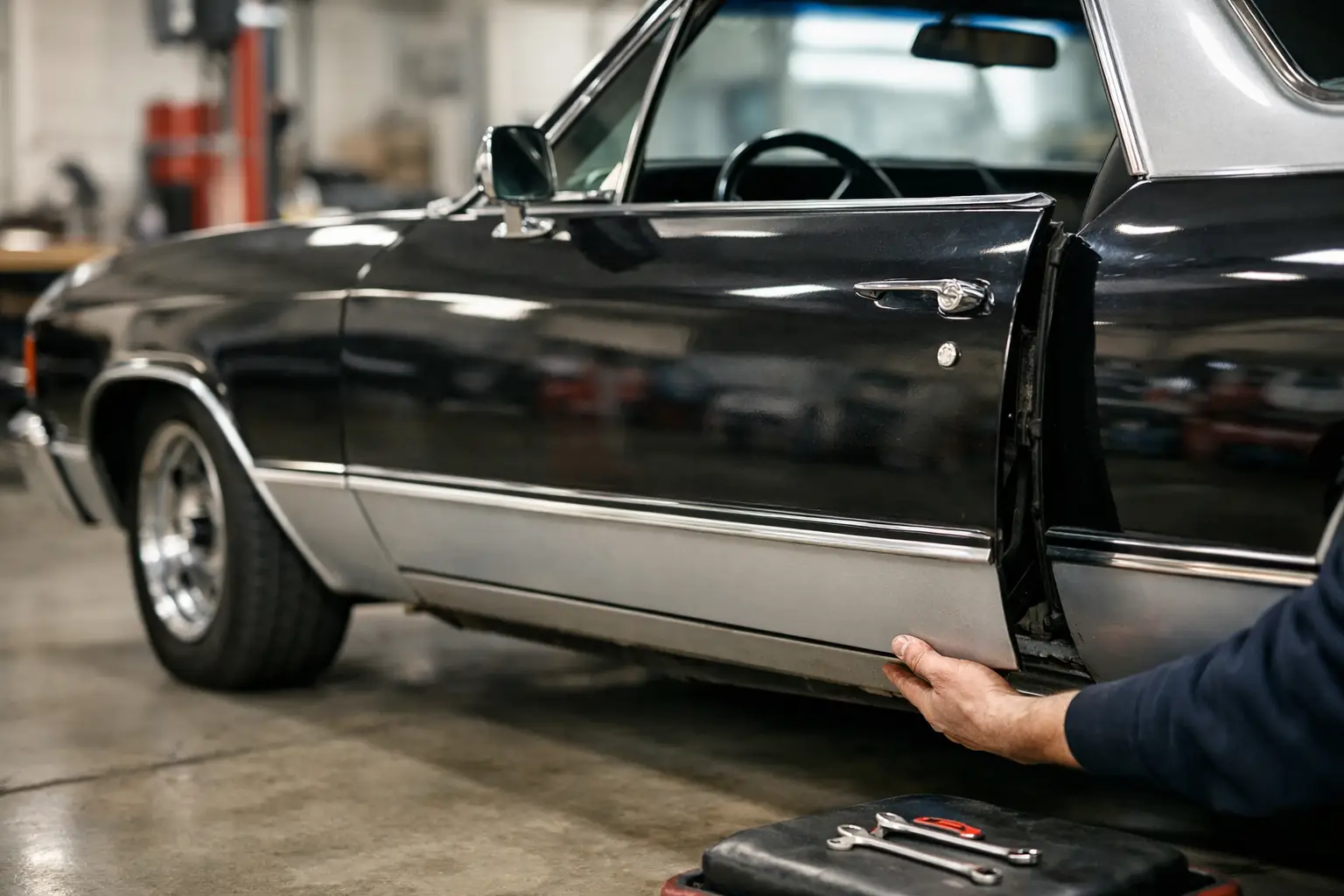
You notice it the first time when the door needs a little lift to shut cleanly, or when the rear edge drops just enough to nick the striker. If you have asked why does El Camino door sag, the short answer is wear – but on a 1964-72 GM A-body, the real answer usually involves hinge pins, bushings, door weight, and sometimes deeper wear in the hinge mounting area or A-pillar.
That matters because a sagging door is rarely just an annoyance. Left alone, it can chip paint, damage the striker, tear weatherstripping, and make a solid El Camino feel tired every time you get in or out. The good news is that most door sag problems are diagnosable with basic hand tools and a careful eye, and many can be corrected without guessing.
Why does El Camino door sag over time?
An El Camino door is long, heavy, and used constantly. Every time the door swings open, the hinges carry that load through the pins and bushings. After decades of use, those wear surfaces loosen up. Once there is extra play in the hinge assembly, the back of the door starts to drop.
On these cars, the most common cause is worn hinge pins and bushings. The steel pin rotates inside a softer bushing, and over time that bushing ovalizes or breaks down. The result is vertical movement you can feel when you lift the open door by hand.
Age adds another layer. Even a car that was not daily driven can develop hinge wear from years of repeated opening, old lubrication drying out, corrosion, and the sheer weight of factory glass, regulator, and hardware. If the door has ever been allowed to swing wide open against its stops, that impact can accelerate wear fast.
The most common causes of El Camino door sag
Worn hinge pins and bushings
This is the first place to look because it is the failure point most restorers find. When the bushings wear, the hinge no longer holds the door in a stable arc. The back edge drops, panel gaps go uneven, and the latch may stop lining up with the striker.
A quick test is to open the door a few inches and lift up on the rear edge. If you see noticeable movement at the hinge, the pins and bushings are likely worn. Sometimes the movement is obvious enough that you can watch the hinge separate slightly as the door is lifted.
Hinge fatigue or bent hinge arms
If the car has lived a hard life, the hinge itself may be worn beyond just pins and bushings. Hinge arms can distort, the spring area can get sloppy, or the hinge plates can wear where they were never meant to carry side load. In that case, replacing pins alone may improve things but not fully restore alignment.
This is where experience matters. A hinge can look serviceable on the car and still have enough distortion to keep the door from fitting right.
Loose or damaged hinge mounting points
Sometimes the hinge is not the whole problem. The mounting area in the door shell or the A-pillar can loosen, crack, or show signs of metal fatigue. If bolts have backed off or the threaded backing plate has shifted, the door can sag even with decent hinges.
On a restoration vehicle, previous bodywork can also be a factor. Filler, hidden rust repair, or poor panel alignment from an earlier repair can make a hinge problem look worse than it is.
Door shell weight and internal issues
The El Camino door is not light to begin with. Add aging glass channels, a heavy regulator, moisture inside the shell, or prior repair metal, and the load on the hinges increases. A door that has rust inside the bottom seam or prior collision repair may carry weight differently than original.
That does not mean the door itself is the primary cause every time, but it can turn mild hinge wear into a very noticeable sag.
How to tell if the sag is from the hinge or the body
Before ordering parts or loosening bolts, inspect the fit closely. Start with the body lines and gaps. If the top rear corner of the door is low and the striker alignment is off, hinge wear is likely. If the gaps change dramatically when you lift the door by hand, that points even more strongly to pins and bushings.
Next, look at the latch behavior. If the door closes only when lifted, the rear edge has dropped enough to miss the striker cleanly. If the latch seems aligned but the front gap is inconsistent, you may also be dealing with hinge adjustment or body-related issues.
Inspect the hinges with the door partly open. Look for rust dust, worn pin heads, missing bushing material, or elongated holes. Then check the mounting bolts for witness marks that suggest the hinge has shifted over time.
If the hinge area on the pillar flexes when the door is moved, stop there and investigate the structure. Replacing hinge pins will not solve a weak mounting area.
Why does El Camino door sag after new pins are installed?
This is a common frustration, and the answer is that pins and bushings fix only one part of the system. If the hinge arms are bent, the hinge mounting points are worn, or the door was never aligned correctly, new pins alone may not restore factory fit.
Installation quality also matters. Bushings must seat correctly, pins must fit properly, and the hinge cannot be forced together in a way that creates fresh bind. On older GM A-body doors, small alignment errors show up fast because the body lines are long and easy to read.
There is also the issue of striker adjustment. Sometimes the door is technically hanging better after repair, but the striker is still set to the old sagging position. That can make the door feel wrong even though the hinge play is gone.
The right way to fix a sagging El Camino door
The practical repair path starts with diagnosis, not adjustment. If the hinge has vertical play, rebuild or replace the hinge first. Trying to align around a worn hinge is a temporary move at best.
Support the door properly before removing hinge components. These doors are heavy enough to cause damage to the fender, rocker edge, or hinge mounting area if they shift unexpectedly. Once the load is supported, inspect both upper and lower hinges. In many cases, if one is badly worn, the other is not far behind.
After hinge repair, align the door to the quarter and rocker first, then address the front gap and fender relationship. The striker should be adjusted last. That sequence gives you the best shot at a clean latch and even body lines.
If the hinge itself is distorted or the mounting points are compromised, replacement or metal repair is often the smarter long-term solution. This is one of those jobs where the cheapest fix is not always the best value. A proper repair protects paint, weatherstrip fit, and the overall feel of the car.
What parts are usually needed?
Most sagging door repairs start with hinge pins and bushings. Depending on wear, you may also need complete hinges, mounting hardware, striker hardware, weatherstripping, or related fastening components. If the door has been dragging for a while, inspect the latch and striker for abnormal wear.
This is where working with a true GM A-body specialist helps. The difference between a universal-looking part and the correct restoration part can show up in fit, finish, and how long the repair lasts. Classic Parts has spent more than 40 years helping owners and restorers source the right components for Chevelle, Malibu, and El Camino projects, especially when the goal is factory-style fit without trial and error.
When door sag points to a bigger restoration issue
Sometimes a sagging door is the symptom, not the disease. If you are seeing poor panel alignment across the front clip, uneven rocker gaps, or signs of prior collision repair, step back and look at the full body fit. Body bushings, frame alignment, and prior metal work can influence how the door sits.
That is especially true on project vehicles that came apart over many years. A freshly rebuilt hinge will not overcome a shifted body mount or a door shell that was repaired out of square.
The trade-off here is time. If the car is a driver and the sag is mild, a hinge rebuild may be enough to restore good function. If you are restoring for paint or show-level panel fit, it is worth checking the surrounding structure now instead of chasing alignment later.
Preventing the problem from coming back
Once the door is repaired, simple habits help. Do not let the door swing fully open uncontrolled. Make sure hinge components are lubricated where appropriate. If the door starts needing a lift again, address it early before the striker, latch, and paint take a beating.
The best El Camino doors close with that solid, properly aligned feel these cars had when everything was right. If yours has started to drop, treat it as a mechanical wear issue you can solve, not just an old-car quirk you have to live with. A careful inspection now usually saves a lot more work later.